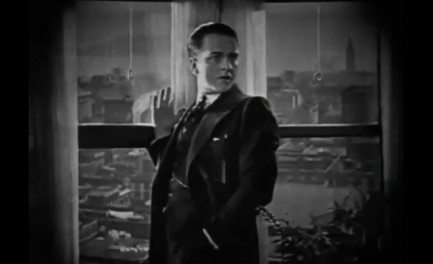
Wednesday, August 24, 2016

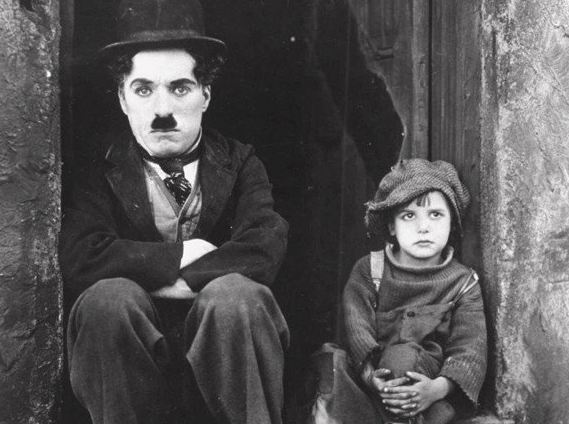
The Kid : The Tramp's Sweet Feature Debut


Despite Max Linder (whose films will be reviewed shortly) being the true father of the slapstick silent comedy, Charlie Chaplin is the one to truly take advantage of all of its incredible possibilities on the big screen. He may not have had, at least in his 1921 feature film debut The Kid, the most elaborate gags, but he almost certainly had a gigantic heart that made his films incredibly charming, lovable, and most of all relatable. Using his ever-popular Tramp character that he had developed over the past decade through a variety of short films, Charlie Chaplin decides to take his goofball character with a heart of gold to the big screen. While it may be a small story – a man finds an infant on the street and decides to care for it – the emotions are played up in a big way and the comedy is pure slapstick gold.
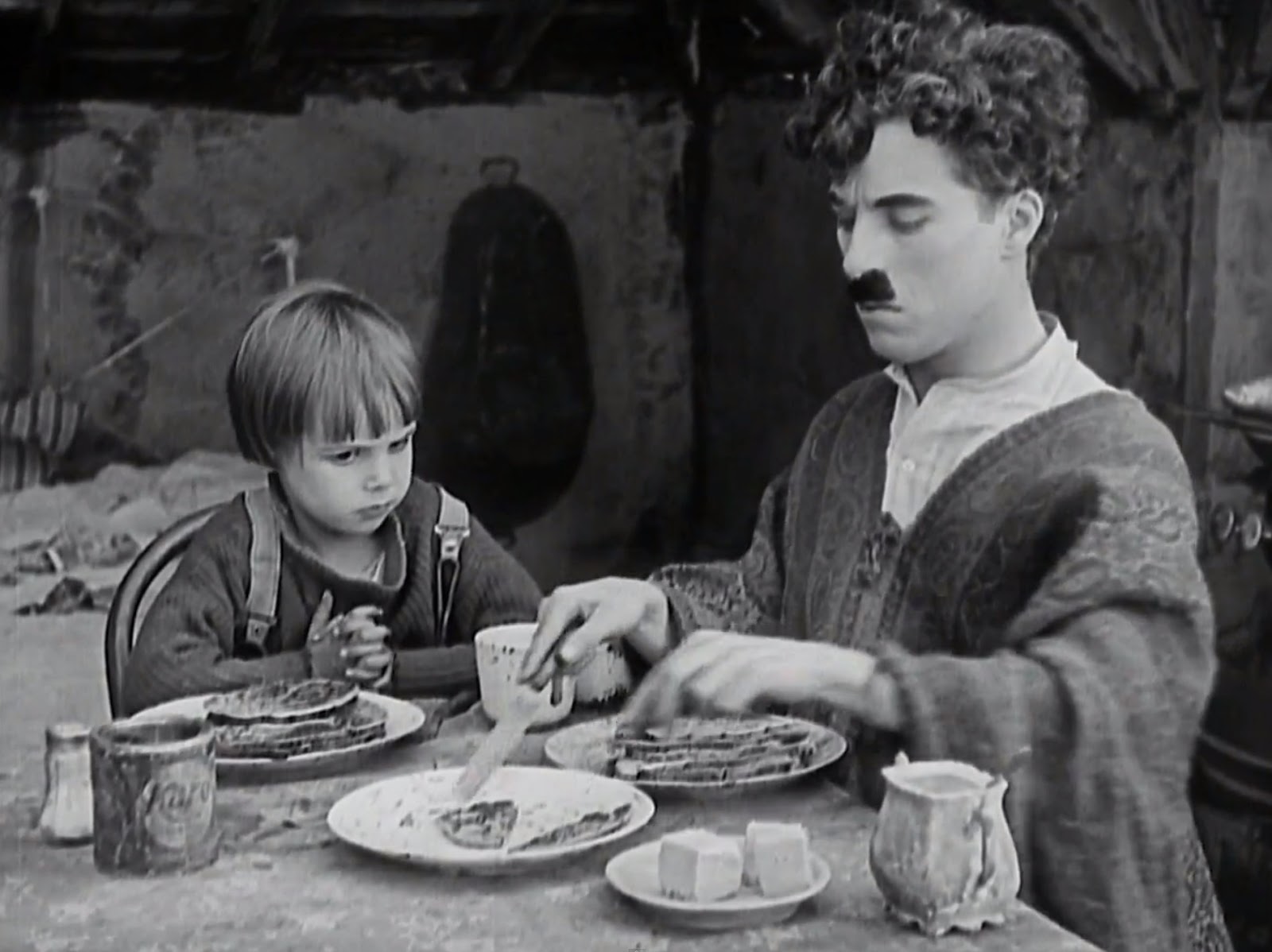
Having heard many, many, many things about Chaplin’s films for many years and having never gotten around to them, it was nice to finally make my way into his filmography with such a pleasant start. However, it’s difficult to shake the feeling that the film almost certainly would’ve worked better as a short film. Okay, I get it; a fifty-minute film is already pretty much a short film – especially by today’s standards (where anything under 60 is pretty much declared a short film). That being said, I feel like the first two-thirds of the film are full of wonderful little cutesy moments that draw you in, but the last third (after such a beautifully moving climax involving a rooftop chase scene and what has to be Chaplin at his emotional best) merely lingers until a predictable resolution.
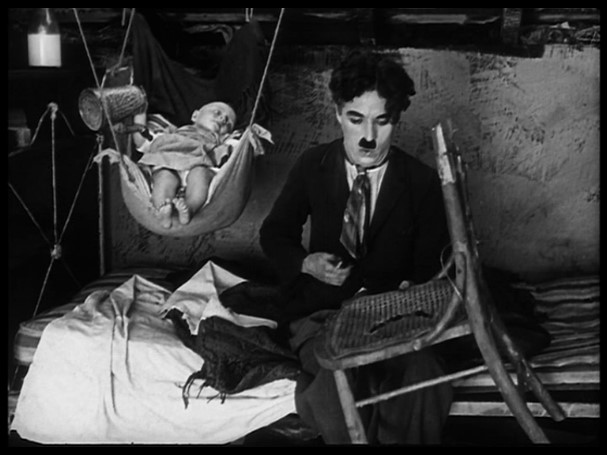
It’s probably unfair to criticize such an early film for predictability, as predictability is something mostly a by-product of living in the 21st century after millions of films have rehashed the same stories for audiences for many decades. Certainly, that’s not what I dislike about the film – which isn’t much I dislike by the way, I still quite love the film – but it’s how it plays out. After such an engaging climax, there’s a lengthy dream sequence that – while funny and light-hearted – does not do much to serve the actual story and feels completely out of place. Once that ends, the film pretty much ends without any heartfelt emotional resolution. It just kind of ends.

At the same time, though, one has to remember this was early cinema and Chaplin’s film was pretty much a breakthrough in terms of blending slapstick comedy and drama together. Perhaps he was still working out the kinks of crafting a feature film and while its last third has flaws, it’s still quite moving and funny – something almost entirely unheard of back in the early 1920s and before (as far as feature films were concerned).


Chaplin perfectly communicates this incredibly heavy and melodramatic story with a fitting light-hearted touch. The two complement each other so well that it’s no wonder the film was such a large hit with audiences back in 1921 (being the second highest grossing film of the year and with a budget less than half of the typical money-makers of the decade). Chaplin, in complete creative control of the product (director, writer, actor, and even composer), uses each of these aspects to deliver on the promise of its opening title card: ”A picture with a smile—and perhaps, a tear.”
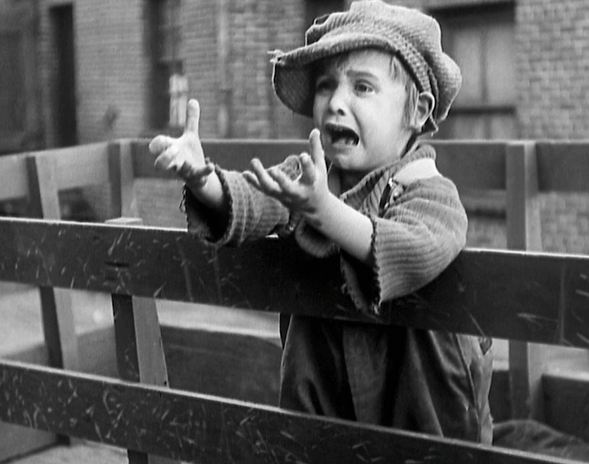
Of course, it’s not just Chaplin alone that makes this film work. In what has to be one of the superior child performances, Jackie Coogan does outstanding work as the titular kid. He’s equal parts cute, affecting, and well-coordinated on par with Chaplin’s Tramp. Both he and Chaplin have incredible chemistry that you believe the credibility of their five-year relationship and it only makes the poignant scenes more effective. Edna Purviance also works wonders here as the “woman,” who had given the kid up but soon became a renowned celebrity and charity giver.

While there are undoubtedly many other Chaplin films to explore, this is certainly a film that shows a lot of potential for Chaplin both as a filmmaker, actor, and composer. His biggest strong suit is obviously his care for his audiences, how he wants to offer a story that both makes them smile and cry in equal doses, but he doesn’t play them for fools. He lets plenty of the action in his films speak louder than words, using very minimal dialogue in his films, and the stories hold quite a bit of weight to them. If Keaton was the thrills, then Chaplin was certainly the heart and this film has no shortage of that here.

8/10


Monday, August 22, 2016

The Cabinet of Dr. Caligari and What Lurks Within


I will start this review by saying that this review contains spoilers. I realize it’s almost a century-old film, but as I had just seen it for the first time, there are obviously those who will be seeing it for the first time, too and saying “well, it’s been around forever!” is no excuse to spoil the fun for anyone. Anyway, that being said…

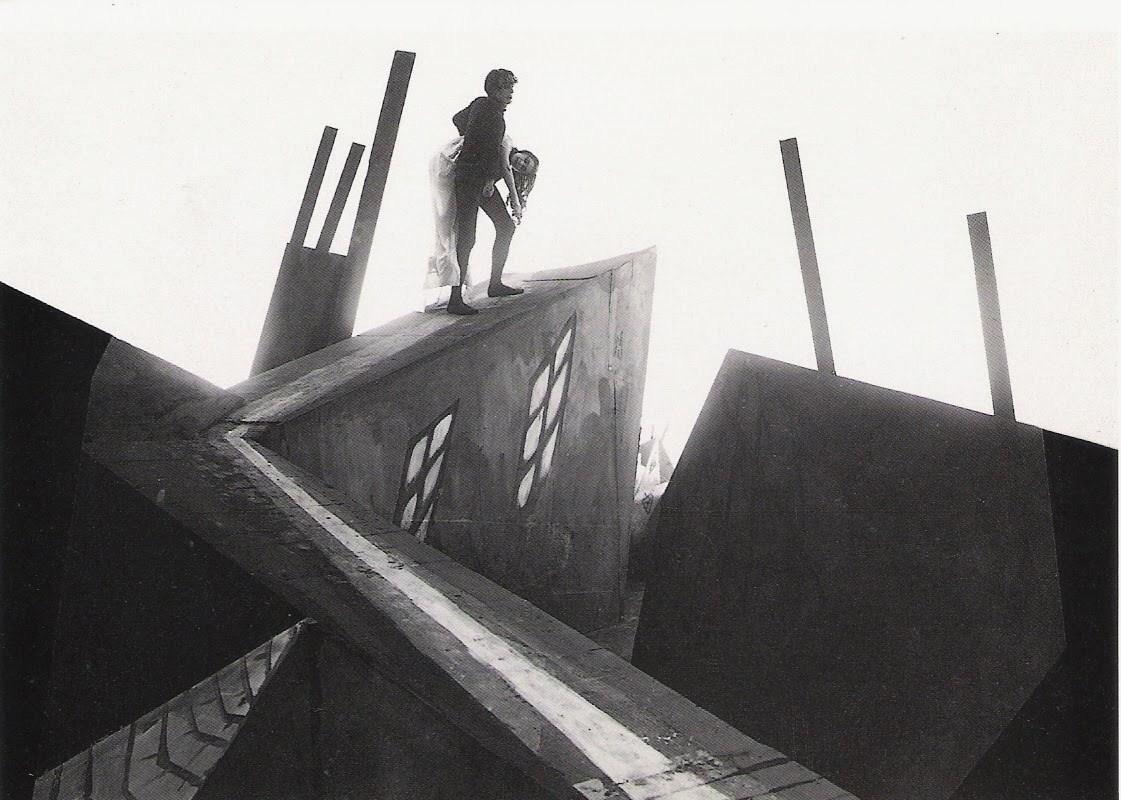
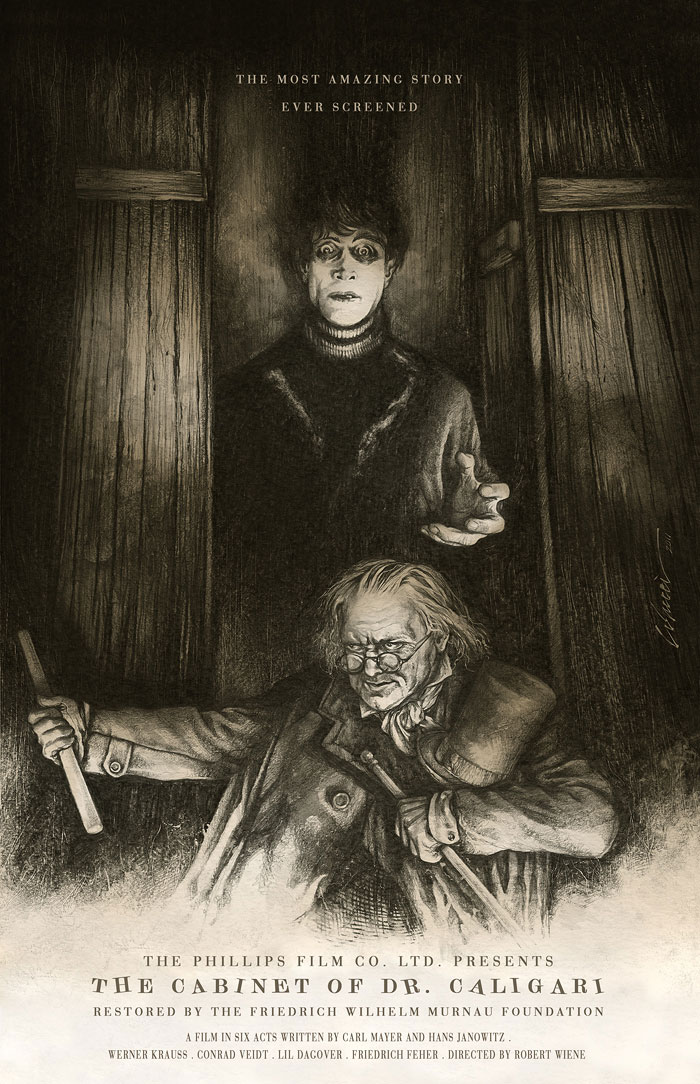
Robert Wiene’s 1920 hit film The Cabinet of Dr. Caligari is not only a film that must have been ripe inspiration for Tim Burton in terms of its design, but is also a fantastic exploration into the mind of mental illness. As many films have tried since, this must have been one shocking film of its time by offering the audience an unreliable protagonist that forces the viewer to think much more deeply about the conflict in the film – as well as the conflict outside their front door. The film follows a man named Francis as he tells the story of the mysterious Dr. Caligari and the sleepwalker living in his cabinet.

Seeing as this was my first foray into the world of German Expressionist filmmaking, I was not expecting such elaborate set designs and gothic style make-up or costuming that would make any Hot Topic regular feel at home.


However, long before the idea of Gothicism became a sweeping teenage trend, the use of intricate, topsy-turvy sets serve to show the world as seen through the eyes of someone with mental illness with ingenious creativity. While the story is perhaps a bit too poorly paced for my liking, this expressionist art on display in this film certainly proves itself to be about the most creative use of imagery since George Méliés’ A Trip to the Moon eighteen years prior.

Putting aside my unabashed love for the design of the film, there are still quite a few flaws for me in terms of the story itself. Despite it only being a little over an hour long, its pacing is all over the place. Perhaps this was the intention of the filmmaker, but for me it felt too much like a rollercoaster. At first the film moves too abruptly to setting up location and characters, then slows down for a large chunk of the film where it hardly explores the wonderful avenues it sets itself up for in terms of conflict or mystery, before it finally reaches its conclusion before any mystery is developed. As a film that is about attempting to uncover who is murdering the townsfolk, it offers very little time in the whole detecting department, and almost right away answers the questions the viewer has.


But if the ending is any indication, maybe there is more here than meets the eye. I’ve read many others discuss the film as almost an early indication of what was to come during the time of World War II many years later. For instance, Dr. Caligari represents the possessive and brainwashing attributes of the German government and Cesare, his somnambulist science experiment, represents the mindless killing machines of Adolf Hitler’s Nazi regime. We always wonder, ”how did a man convince an entire nation that one race was superior to all others and then force them to murder millions for no reason whatsoever?” Perhaps that’s the same question we ask in Dr. Caligari, albeit to a much smaller level. Is it the fascist ideal that’s mentally ill or are we, as bystanders, the ones locked in the madhouse? Maybe it’s reading too much into a film when it was long before Nazism was even a thought in the world, but it’s still a very intriguing thought.

Judging the film solely based on what it must have meant back in 1920, it’s a fine piece of creepy entertainment. A bit lacking in the mystery department, and could’ve easily explored so many avenues that seemed infinitely exciting and would’ve made for a much more worthwhile film for me, but for what it is, it’s certainly one of the best of 1920s so far. In particular, the artistry present in the technical aspects is especially admirable and really draws you in as a viewer into this fantastical world that has served as an inspiration for many filmmakers since.


8/10


Friday, August 19, 2016

The Penalty : An Unusual Revenge Tale with Legs to Stand On


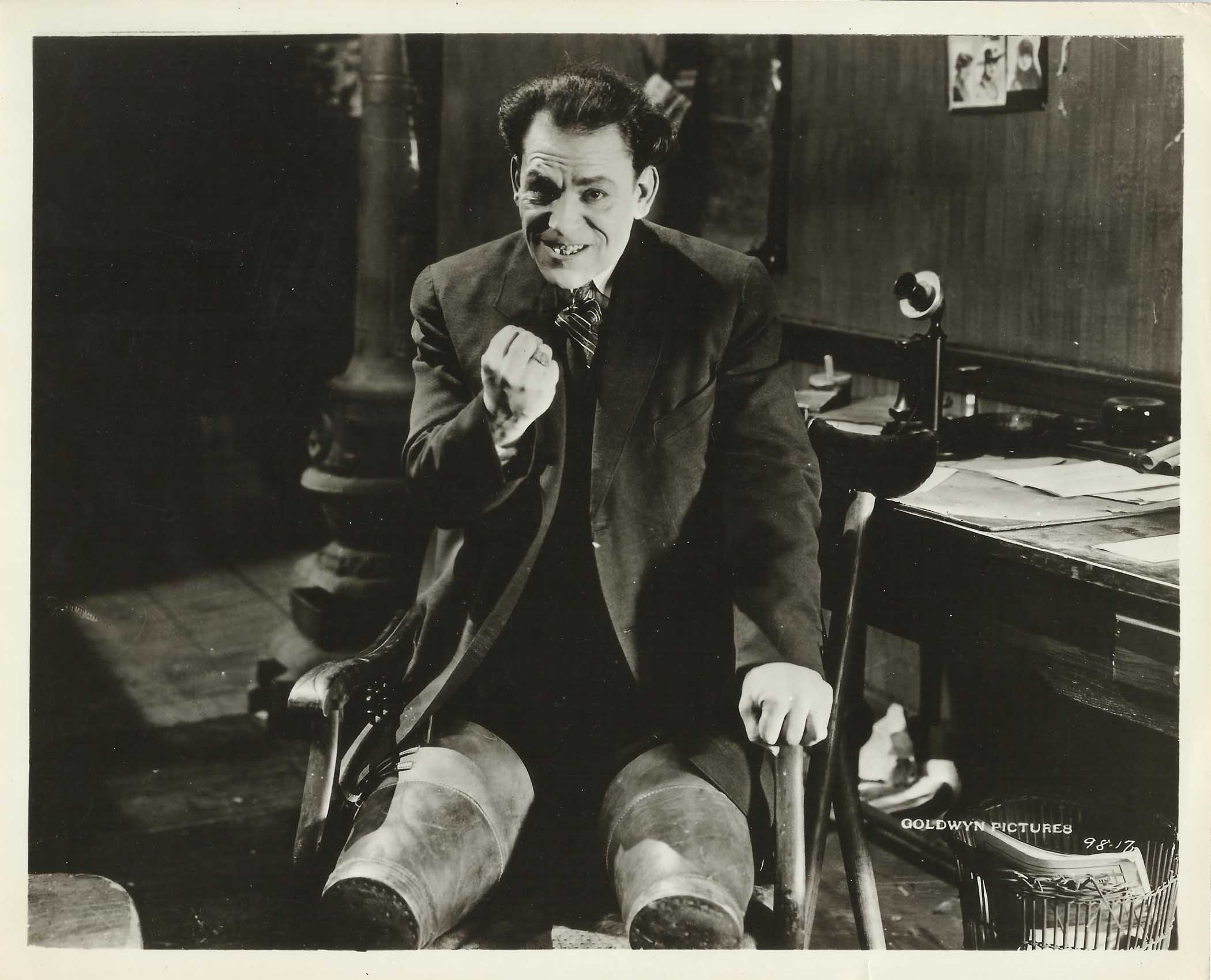
Nearly scraping the bottom of the barrel for 1920, I uncovered a Lon Chaney film that is rarely – if ever – discussed. And it should be because it harbors one of Chaney’s finest performances without any need for extensive (possibly racist) makeup or one-note characters. In Wallace Worsley’s The Penalty, Chaney stars as a man who – at a young age – had his legs wrongfully amputated by an amateur doctor and has lived his whole life with a Napoleonic rage, thriving in the seedy underbelly of San Francisco, while hoping to exact revenge on the doctor – who has now become a widely renowned surgeon – some twenty odd years later.

I can say with certainty that this film must have been one hell of a sales pitch back in the early 1920s:
”So there’s this guy, he has his legs cut off as a kid, but it was a mistake because the doctor can’t read charts, and so this kid grows up and he’s pissed, but he’s also a kingpin of the San Francisco crime syndicate. Oh, also he houses women like sweatshop workers, but we’ll get to that later. Anyway, so he wants revenge on this doctor, but he’s famous now, and his daughter’s a sculptor and she wants to draw Satan, and to drive home the point that he is an evil man, he decides to be her muse for this sculpture. Oh, but he’s only doing it as a ruse to get to her father. Oh, and the cops are onto him with some covert mission. Because he’s evil and stuff. But who could play a guy who looks like Satan and is either has no legs or is willing to tie his legs to his ass to give off the effect that he has no legs? He’s gotta look like Satan though.”
“Well, Lon Chaney’s pretty ugly. And available!”
“Perfect!”


It’s certainly a weird and twisted idea for 1920 – probably not so much nowadays as convoluted plots about troubled weirdos as psychotic masterminds is kind of a niche category all of its own these days. But for 1920, this film was probably ahead of its time. Not in terms of style or technique or even acting, but due to its content. However, that doesn’t mean it’s a weak film because it’s not right for its time, in fact it only makes the film stronger that it can stand apart from the rest of its era so well. My one problem is that the film offers an ending that seems to come completely out of nowhere, almost as if a studio had dipped their grimy fingers into the cesspool of script fuck-uppery and drizzled it over the last ten-fifteen pages of the script. That’s probably a bit harsh, and the ending really isn’t bad as much as it could potentially be divisive, but it still doesn’t feel like it was the way the director or writer really wanted it to go. Maybe you – whoever reads these – can be the judge of that, but for now, it was a big factor in the drastic change in personal feeling I had toward this film.


That being said, the one aspect that was relentlessly commendable, even throughout the wishy-washy ending, is Lon Chaney’s commanding performance. Never mind the fact that the man literally bound his legs at the knees as tightly as he could to give off the effect that he had no legs (ahh, the days of no computer-generated imagery… You can hear Lt. Dan laughing from here), he still managed to offer an incredibly nuanced performance of a troubled, yet misunderstood individual even through the bouts of pain. From what I’ve seen of Chaney so far, he’s been a very over-the-top and generally typecast actor. Either he’s playing a makeup-heavy freak in a horror picture, or a cunning and vile thug/ evil-doer, and while he plays both the freak and evil-doer here, he hardly plays them to the same effect he has in other films. Here, the film rests solely on his shoulders and he can both frighten and cause you to empathize with in the same scene, perfectly capturing the psyche of this eccentric madman without overplaying him to a level of ridiculous he’s often known to do.

Thankfully, director Wallace Worsley helps to capture the persona of the character as well by lingering on scenes and building up tension in scenes just long enough to let the emotions play out naturally. There aren’t any loud, melodramatic scenes that aren’t thrown in just because it’s the 1920s; they’re given credibility and are respectfully tied into the characters’ personalities. The script, for about three-quarters of the film, offers a unique and fully-developed perspective on these types of characters as well – something that films of today could learn a lesson or two from. Even despite how it ends, it’s still a film well worth checking out – if, at the very least, because of Lon Chaney. I doubt there are many performances of his better than this, and it’s certainly the best male performance I’ve seen from the decade (but I also haven’t seen many yet). Sometimes you just have to look in the hidden areas to find small gems like this. I know that I wouldn’t have even thought twice about watching this film if it hadn’t been for my favorite film of the year, Monastery of Sendomir, changing my opinion about how even the small films of nearly a century ago can still hold weight with the big dogs of its time and even today. Hopefully Chaney’s performance does the same.


7.5/10

Sunday, August 14, 2016

Way Down East : Gushing Over Gish and Learning to Forgive Griffith


D.W. Griffith – you've finally redeemed yourself. Mostly anyway. It’s too bad we can’t just simply wipe away the fact that Birth of a Nation exists as it certainly wouldn’t have served to be the inspiration necessary for film to thrive, but damn if this film doesn’t deserve the type of praise I’ve long heard people give Griffith’s films. Having now perfected a craft that he once boldly shaped in 1915 – finally softening all those rugged edges of editing, pacing, shot-framing, and narrative in general – Way Down East demonstrates at last what Griffith has essentially been working hard toward for the past five years or so. Yes, I’m aware Intolerance and Broken Blossoms exist, but I’ve yet to get there, so maybe he figured it out even sooner. Regardless, it still shows how far he had come in those five years to finally perfect a style that many would come to borrow throughout the generations of filmmaking.

In one of the greatest performances I’ve seen from early cinema, Lillian Gish (pictured below) stars as a naïve young woman who is tricked into a sham marriage by a wealthy womanizer and then has to start her life from scratch, attempting to leave her past behind. To talk purely about Griffith’s expertise with the filmmaking is to dismiss the piece of emotional glue that holds the film together and makes it as incredible an experience as it is – and that is quite easily Gish’s performance.

From the beginning of the film, she plays the naivety of a penniless country girl who has never known real love with conviction and delight, but as the film progresses, her performance naturally does as well. Many criticize the film’s melodrama, but that was kind of the type of acting prevalent throughout the 1920s (and probably late into the 1930s as well). However, Gish still commands the screen with all the subtle sadness in her eyes – doing much more with so much less than people give her credit. How she isn’t talked about in the same breath as some of the best actresses of the 1920s, let alone all-time, is beyond comprehension for me as she was one of the greatest aspects of Birth of a Nation in 1915 as well, but here she excels more than I could’ve expected and I know there are many praised performances of hers I’ve yet to see as well.


Gish is not the only performer in the film making an effort, though. Her male counterpart – Lowell Sherman (pictured left with Gish) – who plays the slimy womanizer, plays him to a tee. From his initial appearance on screen, I could almost feel his sleaze seep out of the film reels. He’s very much charming, but quite easily disgusting in his actions and he holds no punches through his performance as well. The rest of the cast all makes an effort, even if some are quite over-the-top (like Vivia Ogden who plays the town gossiper, Martha) that can shift the tone of the film out of place.

The biggest downfall of the film has to be its unnecessary and atmospherically inappropriate subplots that focus on the townsfolk and their daily lives which involve far more slapstick and goofball behavior than really fits the tone of Gish’s heavy dramatic work. For a film that already feels quite long (clocking in nearly two-and-a-half hours) in a decade filled with a ton of very short films compared to films of today, over half an hour could’ve easily been cut out because of these subplots and the entire story would’ve still been as impactful. In fact, maybe even more so, that way we as an audience could feel the depth of Gish’s pain and emotional turmoil rather than be interrupted every fifteen minutes by some peculiar, Patton Oswalt-looking screwballs and their slapstick humor.

Altogether, this is certainly quite an admirable accomplishment from a director who once filled me with such rage due to his completely ignorant ideals on display in his influential “masterpiece.” In fact, he actually goes the extra mile and uses this film as a method of battling the ignorance and intolerance of many of his day (and yes, I’m aware he already combatted the public’s backlash with 1916’s Intolerance, but as I haven’t seen that yet and the fact that this is still quite relevant to the unfortunate inferior roles of women back in the day, I’m not exactly counting that). As one user on IMDB mentioned to me, while DeMille was one to focus on gender roles or issues facing women in a forward-thinking way, Griffith was always focused on the past and looking to perfectly reflect life through his art rather than send a message about the way things could be. Regardless of which director better raises the issues, it’s still interesting at least that Griffith ever bothered to address such issues faced by women considering how intolerant I once believed him to be. Here’s hoping that his Birth of a Nation days were left back in 1915 and each film of his I’ll see from here on out will show the same type of humanism displayed in Way Down East. Maybe using Gish in nearly all of his films will certainly help; I know it would get me to watch them again, that’s for sure.


8.5/10

Saturday, August 6, 2016

Outside the Law – and Just Outside the Realm of Strong Filmmaking


Attempting to put aside my serious judgment and hatred of using “blackface, yellowface” or any type of racist makeup to allow white movie stars to play these roles that could just as easily be played by the actual people of the race they are attempting to portray… Tod Browning’s Outside the Law still has a lot of faults outside of this that makes it difficult to fully enjoy the film beyond that. It’s not a bad film by any means, but it’s a weak one for sure and if not for the strong performances and intensity of some key scenes, it would be nowhere near the rating for which I give it.

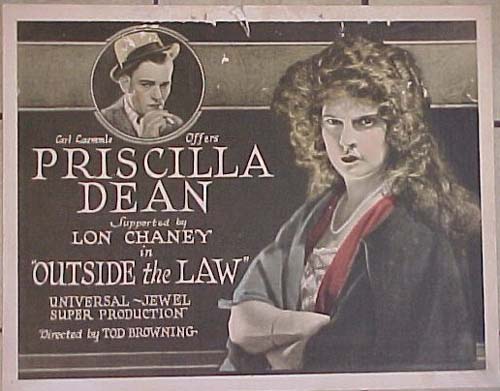
After her reformed kingpin father, “Silent” Madden is wrongfully sentenced to prison after a scheme by master criminal Black Mike Sylva (played with rugged authority by Lon Chaney in a dual-role where he also plays an Asian servant named Ah Wing for some reason I can’t comprehend whatsoever…), Molly Madden (Priscilla Dean) works together with Black Mike’s right-hand man (played by Wheeler Oakman) to take him down. While the plot works for about two-thirds of the film, there is this unfortunately large chunk of the mid-section that is dedicated to both Dean and Oakman sitting in a room hiding out from police where the schmaltz and "convenience" is played up to a tee which takes away from a good amount of the intensity that had been built up to that point.


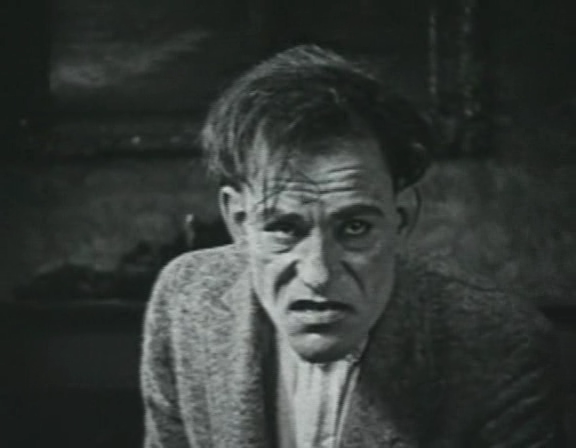
It’s not until Chaney’s Black Mike (pictured left) makes an appearance toward the last twenty minutes that the film finds new life once more and it leads to a shoot-out that, if not for the damaged quality of the film that made most of it almost incomprehensible, would have been very intense.

While I understand both that it’s unfair to rate a film based solely off of the standards of its time (the racist non-casting of Asian actors) and that I can’t poorly rate a film due to its film reels’ unsuccessful transition to modern times, I can still say the film would have easily not been worth the time if not for the strong performances of everyone. While Chaney and E. Alyn Warren (who plays the Confucius-like Chang Lo) both unnecessarily play Asian characters, Warren still plays Chang Lo quite well and with respect to the character and his race, while Chaney is quite pointless and over-the-top as Ah Wing, but gives a remarkably fierce turn as the thuggish Black Mike.


Beyond those two, the two leads (pictured right) – Dean and Oakman – manage to make the consistent banter that fills up a large portion of the film work as they show off their acting range from sweet to intense to devious – just like any good thief.

Without any of these performances, however, I would say Tod Browning (popularly known for his 1931-32 one-two punch of Dracula and Freaks) would have had a humungous flop on his hands and not have had the career he wound up having. This is not to undermine his strengths as a director as when characters were not sitting in rooms talking, he still crafted some suspenseful action sequences (primarily shoot-outs) and he really excelled when all of his characters were in play together. While it feels like 1920 had little to offer outside of the generic, each one of the films reviewed so far – including this one – showed potential for directors or stars who would go on to quite a bit of fame over the decade and even over onto the 1930s. Maybe without the racist makeup/ casting, perhaps their films improve (after all, he did remake this film with the powerful Edward G. Robinson in Chaney’s role without requiring him to play an Asian character too!). So perhaps they do learn after all. At least it’s not as bad as Birth of a Nation…


5.5/10


Friday, August 5, 2016

Pollyanna : A Schmaltzy, Naïve Introduction to Mary Pickford


As my first foray into the work of the ever-renown Mary Pickford (labeled as “the most popular star in screen history” by film historian Ethan Katz), and considering it was in tune with my 1920 streak, I decided to check out Paul Powell’s Pollyanna. While it’s probably better known by its 1960 remake by Walt Disney Studios, the one aspect I’m sure that film was missing was the glee and charm of Mary Pickford. While she’s not as well-known to me as she is to most, she certainly kept my attention throughout the entire film thanks to her vibrantly sweet performance.

Even though she was in her late twenties during the making of this film, Pickford plays the young recently-orphaned titular Pollyanna who goes to live with her cheerless Aunt Polly after her father passes away and she has no other relatives.

As expected, their personalities clash to create much conflict though Pollyanna becomes a shining symbol for all those in the town to live up to as she makes many friends during her stay. As the title cards state far too many times over during the film, Pollyanna likes to play the “Glad Game” and is “glad” about this, “glad” about that, and it brightens everyone’s day.

I would say it’s the cynic in me that finds that level of consistent optimism to be incredibly aggravating – probably akin to her miserable Aunt Polly – but it really just isn’t realistic to me for someone to audibly talk about the optimism they could find in each and every situation. That being said, Mary Pickford certainly helps to sell such a cheesy, corny performance that actually manages to work to make even the mean, ol’ Grinch grow a heart three sizes bigger. From the opening scene alone, as Pollyanna talks with her father on his deathbed, she perfectly blends the optimism of her character with the real emotion associated with losing a loved one.


Seeing as how I’m a pretty sentimental individual, I certainly hoped the rest of the film would offer the same amount of tear-jerker scenes. Instead, what I received was far too many unrealistic scenarios of this Christ-like child spreading love far and wide and affecting all the grumpy people of the town, turning them into lively, loving beings. Most of the time, I wouldn’t mind, but maybe it was just a film made for the audience of its time (as is common knowledge, the Great Depression was fast approaching during the decade of the 1920s) that attempted to make people smile even during the roughest of times. Watching today in 2016, however, offers very little impact but a feeling that the film was unrealistic and overly corny (not to mention convenient, with her next-door neighbor knowing her mother quite intimately).

The one shining light, though, definitely has to be Mary Pickford’s delightful performance that must have certainly been an inspiration for Amy Adam’s equally charming turn in Disney’s 2007 princess/live-action hybrid film Enchanted. Though Pickford’s height and ageless beauty certainly made her able to play child roles long past her transition into adulthood (almost like Ellen Page in the 2000s), it worked for this film in particular and certainly helped establish her as a profitable and often-revered name in the film industry. Hopefully the rest of her filmography demonstrated a bit more inspired filmmaking than this one. For what it’s worth, though, she nailed the performance here so it wasn’t all that bad.


5.5/10


Thursday, August 4, 2016

Fantastical Monsters Alive in Prague: Paul Wegener’s The Golem


I suppose if you only ever dedicate yourself to one role or film for the rest of your career, then make it the best you possibly can. This thought process must have been what director and star Paul Wegener had in mind when he directed his third adaptation of The Golem. After both directing and starring in a 1915 and 1917 version of essentially the same story (or at least involving the same character), Wegener reprises the role once more and sits behind the director chair to bring a Frankenstein-esque story to the big screen a third time.

The first thing I noticed about the film was its incredible use of saturation to color the film strips to bring a lot of vibrancy to the picture. From the film’s opening images, the prophesizing Rabbi Low (played by Albert Steinrück) looks to the stars atop of his humble church and smells a catastrophic disaster fated for his beloved Jewish community. From the bluish tint to the film that gave the “night” feel to the film (in the bottom-left corner of the picture to the left) as well as the sickly green glow of his lair (top-right in the picture), I was instantly drawn into the atmosphere of the film.


In order to battle the impending doom, Rabbi Low builds a creature – The Golem – with the help of dark spiritual forces to protect his people. What happens next is essentially the same story as Dr. Frankenstein and his famous monster.

Though the story is a slightly generic version of Frankenstein, and with much more political allegory and religious sentiment to boot, Wegener still tells the story in an exciting way. Wegener himself (pictured below, who looks a lot like Guardians of the Galaxy’s Dave Bautista) also plays the titular Golem and with more dedication than many of the other performers in the same film.

Despite having no dialogue whatsoever, he acts expertly through his facial expressions and mannerisms – either played to frightening or humorous effects. Outside of him, it was nice to see Ernst Deutsch of The Third Man fame at a very young age as the cowardly Rabbi protégé.

Though the ending carries a few anti-Semitic vibes with it and goes to some really strangely dark places, the film still serves as a film full of wonder and excitement that must have been a thrill to see in the early 1920’s. I can say so far that the European directors of the time certainly showed much more dedication to their craft than the American/ Hollywood directors offering simple, crowd-pleasing stories. While the film itself was not exactly perfect, it was still a great fantasy/ adventure film (some call it one of the early “horror” films as well, but I rarely got those vibes). The visuals gave the film the proper flare to draw the viewer into its atmosphere and the costumes/ production aspects were all put together proficiently to feel as if you were alive in the sixteenth century watching this story unfold. While Wegener never made anything quite as successful as his Golem films, especially this version, it certainly helped usher in (along with Robert Wiene’s The Cabinet of Dr. Caligari) a long tradition of successful horror/ fantasy films from European directors. For that alone, it’s worth checking out.

7.5/10