As mentioned in my review for The Kid, while Charlie Chaplin may have been the premier slapstick comedy filmmaker of the 1920s, it was Germany’s Max Linder who truly fathered the art form. Though a lot of his work is now lost, as is unfortunately the case with many films of the decade, there still remain three prominent feature films intact – each released within a two-year span. These films are the incredibly influential and oft-hilarious Seven Years Bad Luck and the sweet and goofy Be My Wife.
_-_Ad_1.jpg)
Before the Marx brothers would eventually borrow the mirror gag, Linder did it first with Seven Years Bad Luck. As with both of 1921 features, he played a dumbed-down and exaggerated version of himself that would serve as inspiration for Charlie Chaplin and especially Buster Keaton. With his signature pencil-thin moustache, his silly top hat and cane, and a general dumbfounded and down-on-his-luck attitude, Linder brought slapstick to life by crafting such ridiculous (and worst-case) scenarios for his protagonist and then allow him to struggle his way back to a happy ending. In the case of Seven Years Bad Luck, the story follows Linder who wakes after a heavy night of drinking (something many can still relate to today!) as he accidentally breaks a mirror before his eventual marriage to Betty (played wonderfully by Alta Allen) and begins to sense that bad luck is headed his way, potentially dooming his marriage. Chaos ensues, as it often does in slapstick, and Linder masterfully weaves his way through each scenario with both physical finesse and charisma that must have certainly been an inspiration for many aspiring slapstick filmmakers of the day (maybe even now).

The film is not as sweet or heartfelt as the likes of Chaplin nor is it as visually stunning or provocative the way Buster Keaton’s films often are, but it still offers plenty of laughs and the infamous mirror gag (which you can find on YouTube) is some of the best stuff I’ve seen in a slapstick comedy to this day. However, after the first fifteen minutes go by, there is not much of a plot as the film simply moves from gag to gag. What would have worked better as a short film simply drags out the story until it’s over – which could potentially be why Linder never found success with his three features. For what it is, though – and if you’re a fan of slapstick – the film is still quite funny and offers a shred of genius that you could see why he was so inspirational to other artists of the time.
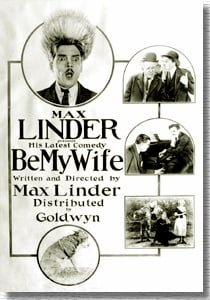
Be My Wife, his second 1921 feature, does not have the same spark of creative hilarity that Seven Years Bad Luck (save a pretty hilarious scarecrow scene), but it does attempt to tap into the heart and relatability of his characters. It could just be me, as has been the case since I would watch Tom and Jerry as a kid, I always hated watching protagonists get treated or accused unfairly even if just played for laughs. I always found myself rooting for Tom to beat that little brat Jerry, but it never happened and it made my heart hurt watching that show as a little kid. The same goes for a lot of slapstick comedy where I find the humor funny, but it irritates me to no end seeing a good character be accused of something he didn’t do. Sure, in the end, everyone gets their just desserts and the protagonist gets the girl, yah-dah yah-dah yah-dah… But when the entirety of the film is about a character being unfairly accused, it makes it difficult to watch. It’s a personal thing, I’m aware, but it’s a big reason why I found the humor less funny this time around and the film itself less pleasant. For what it is, though, it still has a lot of heart and shows a softer side to Linder – even if the ending feels super rushed.
All in all, though he was successful for a brief period in the 1910s, the 1920s brought him little in the way of success. His victorious reigns were then handed to the likes of Chaplin, Keaton, and Lloyd who would all find greater success in Hollywood borrowing inspiration from his films and better utilizing the framework he set.

As with an unfortunate number of great comedians in the world, his life was marred by anxiety, depression, and ultimately tragedy. In 1925, four years after these two films were released, he and his wife were found dead of an apparent murder-suicide at a hotel in Paris. Though it’s difficult to imagine the same man who made such lively films full of hilarity and love could ever end his life in such a way, at least his work will live on and (just as he most likely would have wanted) will be remembered through his art instead. So for what it’s worth, I’m thankful for Max Linder. Even though these two films were not as great as other slapstick I’ve seen, they were still a delight and his influence on many others in the art form is admirable. As Linder stated after the premiere of his final film, “I don’t feel funny anymore;” if it’s any consolation, I think the world and many other artists may disagree.