Showing posts with label d.w. griffith. Show all posts

Wednesday, September 7, 2016

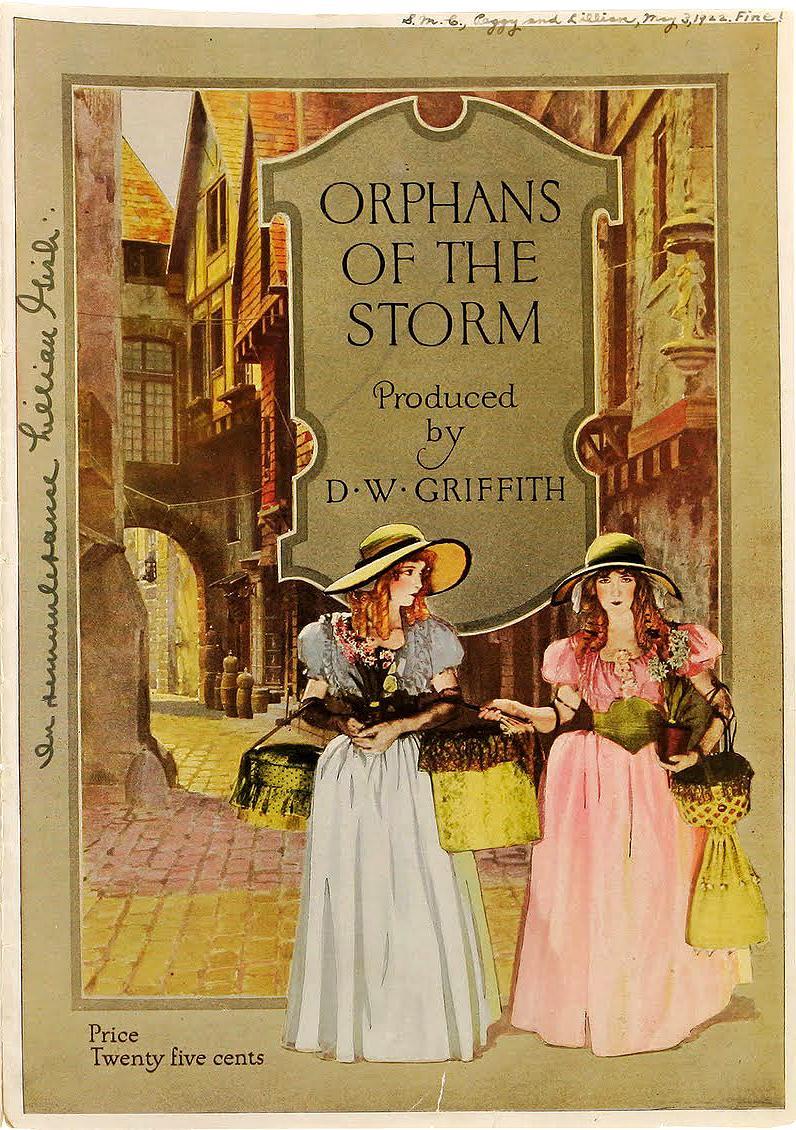
Orphans of the Storm – Gish Does It Again


I certainly hope that D.W. Griffith understood just how much he owed thanks to Lillian Gish in making his career what it is. Surely, he’s a director of talent – putting aside his personal opinions. He’s a pioneer of cinema and his technique has served as the foundation of filmmaking for the last century. But what makes his films so lasting, moving, and relatable is the emotional core of his last two films (and certainly many parts of Birth of a Nation as well) – Lillian Gish. In his 1921 film, Orphans of the Storm, Lillian is paired with her real-life sister, Dorothy Gish. In the film, the two play fictional sisters as Lillian (as Henriette, the daughter of a poor family) and Dorothy (Louise, the blind daughter of a rich family who had left her on the doorsteps of a church as a baby and was taken by the father of the poor family who was about to do the same) attempt to make their way to the center of France’s turmoil on the eve of the French Revolution in order to cure Louise’s blindness. Of course, as often turns out in Griffith’s films, things do not go their way and in fact go from worse to worse to devastatingly worse.

Despite being far ahead of his time in terms of filmmaking expertise, Griffith was often one to muse on the days long past. Someone once said – and I may have mentioned this in my review for Way Down East as well – that where DeMille focused on the changing times among everyday people, Griffith yearned for the olden days and often hated the way times changed. With Orphans of the Storm, his opinion still has not wavered. In fact, he goes far, far into the past – back to the days of revolution in France – to tell of a story of changing times (down with spoiled monarchs, up with the revolutionists!). The one aspect that Griffith manages to surprise with is how he actually shows both as equally right and wrong, but the entire time Henriette and Louise are forced into undesirable situations on both ends as a result of merely being bystanders.


Perhaps it’s this continuing idea of intolerance that Griffith wants to state for the world. As he attempted half a decade before with a film literally called Intolerance, it seems once wasn’t enough to get his point across and with each new film he has attempted to exploit the wrongdoings of the world. What sets Orphans of the Storm apart, however, is it shows the damage done to mere bystanders. No longer is it one side against another, we now see a third side entirely impartial yet wholly affected regardless.

Of course, we as an audience would have a difficult time truly caring about this third side if not for the remarkably moving performances of both of the Gish sisters (who are pictured left). Though I vastly prefer Lillian Gish here (the sister on the right in that picture), mainly because the film is practically hers and she gets many more key scenes than Dorothy, both still put on a great display of the effects of inequality and the love formed from sisterhood – whether by blood or not. The one quality of Lillian Gish’s work that has always stuck with me is her ability to both subtly and melodramatically play key emotional scenes. Her hands wave, her body crumbles, her voice gets (albeit inaudibly, because, you know, silent films) loud, but all the while her eyes do something entirely unique. She has very large eyes, which makes them the focal point of her close-ups (and perhaps Griffith understood that which is why he often allowed her to do her thing during close-ups); however, her eyes are often a character within itself, telling an entirely new story than what her words might say. To me, that’s the concept of strong acting – when you believe the emotions so wholeheartedly that you can look into their eyes and see it. And Gish certainly does that.


As for the film itself, despite being a bit overly long – as is Griffith’s one fault – very little of it is used to tell unnecessary subplots the way Way Down East did. Each character has a purpose to the story, however small that may be, and each scene is necessary for the overall arc of the story. This may sound like a criticism as well, but I assure you it’s not, the last twenty minutes felt like it went on for hours simply because of the amount of tension built up. Without giving anything away, it’s a climax easily as breathtaking and heart-pounding as the icy climax of Way Down East yet without any need for fancy special effects.

I can certainly say that Griffith has finally shown his merits as a filmmaker in my eyes. It’s still impossible to forgive him for the ridiculous amount of bigotry in his foremost film, The Birth of a Nation, but his mastery on display in both of these last two films (Way Down East and Orphans of the Storm) and his elements of deconstructing intolerance across space and time has certainly made up for its lack thereof in Birth. Though this film was apparently the last truly great film in Griffith’s filmography, chronologically speaking, it’s certainly a strong one. In fact, it may even just be his best one. It’s the one with the least amount of mess, it perfectly puts all the techniques and elements he’s been working toward for nearly a decade into perfect dramatic and romantic use, and of course is sealed with a kiss by the always fantastic Lillian Gish. Perhaps his greatest downfall was his love for the past and rarely looking forward, but as his films are now staples of cinematic history, perhaps he can rest easy in his grave knowing he now lives where he always wanted.


8/10


Sunday, August 14, 2016

Way Down East : Gushing Over Gish and Learning to Forgive Griffith


D.W. Griffith – you've finally redeemed yourself. Mostly anyway. It’s too bad we can’t just simply wipe away the fact that Birth of a Nation exists as it certainly wouldn’t have served to be the inspiration necessary for film to thrive, but damn if this film doesn’t deserve the type of praise I’ve long heard people give Griffith’s films. Having now perfected a craft that he once boldly shaped in 1915 – finally softening all those rugged edges of editing, pacing, shot-framing, and narrative in general – Way Down East demonstrates at last what Griffith has essentially been working hard toward for the past five years or so. Yes, I’m aware Intolerance and Broken Blossoms exist, but I’ve yet to get there, so maybe he figured it out even sooner. Regardless, it still shows how far he had come in those five years to finally perfect a style that many would come to borrow throughout the generations of filmmaking.

In one of the greatest performances I’ve seen from early cinema, Lillian Gish (pictured below) stars as a naïve young woman who is tricked into a sham marriage by a wealthy womanizer and then has to start her life from scratch, attempting to leave her past behind. To talk purely about Griffith’s expertise with the filmmaking is to dismiss the piece of emotional glue that holds the film together and makes it as incredible an experience as it is – and that is quite easily Gish’s performance.

From the beginning of the film, she plays the naivety of a penniless country girl who has never known real love with conviction and delight, but as the film progresses, her performance naturally does as well. Many criticize the film’s melodrama, but that was kind of the type of acting prevalent throughout the 1920s (and probably late into the 1930s as well). However, Gish still commands the screen with all the subtle sadness in her eyes – doing much more with so much less than people give her credit. How she isn’t talked about in the same breath as some of the best actresses of the 1920s, let alone all-time, is beyond comprehension for me as she was one of the greatest aspects of Birth of a Nation in 1915 as well, but here she excels more than I could’ve expected and I know there are many praised performances of hers I’ve yet to see as well.


Gish is not the only performer in the film making an effort, though. Her male counterpart – Lowell Sherman (pictured left with Gish) – who plays the slimy womanizer, plays him to a tee. From his initial appearance on screen, I could almost feel his sleaze seep out of the film reels. He’s very much charming, but quite easily disgusting in his actions and he holds no punches through his performance as well. The rest of the cast all makes an effort, even if some are quite over-the-top (like Vivia Ogden who plays the town gossiper, Martha) that can shift the tone of the film out of place.

The biggest downfall of the film has to be its unnecessary and atmospherically inappropriate subplots that focus on the townsfolk and their daily lives which involve far more slapstick and goofball behavior than really fits the tone of Gish’s heavy dramatic work. For a film that already feels quite long (clocking in nearly two-and-a-half hours) in a decade filled with a ton of very short films compared to films of today, over half an hour could’ve easily been cut out because of these subplots and the entire story would’ve still been as impactful. In fact, maybe even more so, that way we as an audience could feel the depth of Gish’s pain and emotional turmoil rather than be interrupted every fifteen minutes by some peculiar, Patton Oswalt-looking screwballs and their slapstick humor.

Altogether, this is certainly quite an admirable accomplishment from a director who once filled me with such rage due to his completely ignorant ideals on display in his influential “masterpiece.” In fact, he actually goes the extra mile and uses this film as a method of battling the ignorance and intolerance of many of his day (and yes, I’m aware he already combatted the public’s backlash with 1916’s Intolerance, but as I haven’t seen that yet and the fact that this is still quite relevant to the unfortunate inferior roles of women back in the day, I’m not exactly counting that). As one user on IMDB mentioned to me, while DeMille was one to focus on gender roles or issues facing women in a forward-thinking way, Griffith was always focused on the past and looking to perfectly reflect life through his art rather than send a message about the way things could be. Regardless of which director better raises the issues, it’s still interesting at least that Griffith ever bothered to address such issues faced by women considering how intolerant I once believed him to be. Here’s hoping that his Birth of a Nation days were left back in 1915 and each film of his I’ll see from here on out will show the same type of humanism displayed in Way Down East. Maybe using Gish in nearly all of his films will certainly help; I know it would get me to watch them again, that’s for sure.


8.5/10

Thursday, July 28, 2016

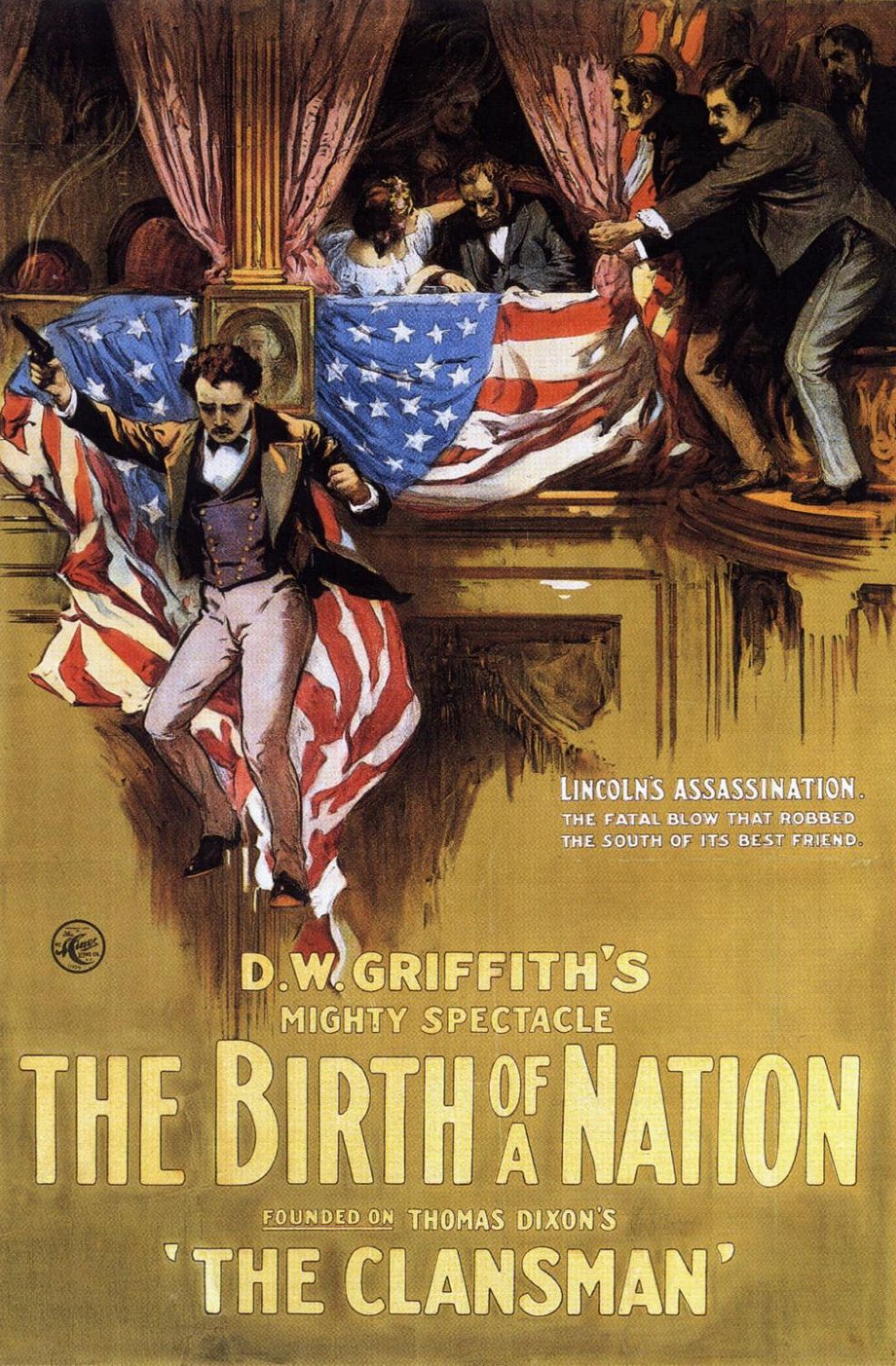
Ignorance and the Re-Birth of the Klan: D.W. Griffith’s “Masterpiece”

It is really, really difficult to not hate D.W. Griffith’s The Birth of a Nation. A film made by a man so ignorant and blatantly racist that it took me about nine different attempts of pausing and taking a break from the film to finally finish it over the course of two days. I’m sure the controversy this film stirred has been talked to death among countless reviews, essays, and more, but it’s simply too difficult to ignore the fact: this film is as unflinchingly bigoted and racist as it gets. Yet, simultaneously, it’s difficult to ignore just what this film did to the art of cinema – and that’s what I’ll do my very best to focus on in this review.

The film follows two families on opposing sides of the American lines during the 1860’s when America was on the verge of a national war and racism was alive and well. Comprised of two parts (one focusing on the calm before the Civil War storm and its extensive battle, and the second focusing on the subsequent Reconstruction Era), the film was the longest and most extensive American audiences had witnessed before. In fact, the film was the highest grossing for many years following its release and spawned sequels (that’s right, sequels! So, if you didn’t get enough racism the first time, come on down and get you some more!). However, the reason this film was such a massive hit was not due to its content (despite popular belief, not everyone was on the same wave-length as Griffith in 1915; in fact, it stirred up quite a controversy and he had to make Intolerance as a result of the backlash due to his own intolerance); rather, the film was a hit due to its never-before-seen use of camera movement, close-ups (particularly with the "iris effect" shown below), its own original music score (though borrowing from the classics as well), parallel editing techniques, wide-ranging narrative scope, and many other story-telling devices that are now used as common practice in many of today’s films.

Attempting to ignore the blatant discriminatory attitudes the film portrays, it’s easy to see why this film is still held in such high regard. In fact, if it weren’t for Griffith’s intolerant behavior, historians, critics, and film fans alike would celebrate this film for giving birth to the art of cinema. Unfortunately, not only did it inspire countless filmmakers and artists alike, but it also rejuvenated the spirit of the notorious Ku Klux Klan – hence why they still remain to this day.

But isn’t that the power of film? Trying to put aside my personal feelings about the situation, the influence this one film had on so many others – the effects of which we still feel now and forever – only further demonstrates the incredible power of cinema and why it remains such a celebrated art form to this day. Imagine the year is 1915 and you walk into the theater to see this film and you are simply blown away by the technical achievement at hand. It’s almost like a night out at the opera, but instead the actors are simply pasted onto hundreds of photographs rolling by at light-speed. And there’s a story that spans years with countless characters to become attached to and empathize with (depending on which side you’re on). And the battle sequences almost feel like you’re right there on the field. And the camera gallops along with the horses, and the camera closes in on the actors’ faces and it feels so intimate and real. What a wondrous treat the cinema must have been on that opening night!

Sadly, the film’s regrettably positive representation of such a racist culture nearly makes any admiration for the technical achievement feel like an afterthought. Aside from each of these technical accomplishments, the only positive remark I can make about the film is that it spawned countless others to command the screen just as D.W. Griffith did even better – and far less narrow-minded. For that, I am grateful as I’m not sure where I would be today without my love of film and I couldn’t imagine a world without its existence, and I am equally grateful to live in a world that no longer allows films like The Birth of a Nation to get made… unless it’s title is borrowed by a non-white with a proper focus on the trials and tribulations of his culture.


6.5/10 -- Rating based off the film's quality; with personal feelings, an easy 1/10.