Saturday, September 3, 2016

The Four Horsemen of the Apocalypse – Analyzing 1921’s Most Popular Film


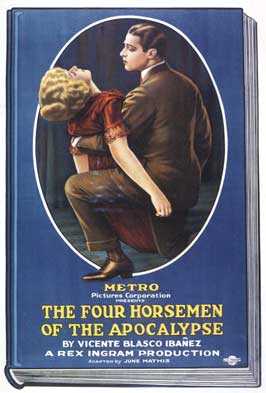
Before Rudolph Valentino rose to stardom in the 1920s, he starred in the lengthy epic on the consequences of war and hatred, Rex Ingram’s The Four Horsemen of the Apocalypse. The film, having very little to do with the actual story of the titular horsemen, plays out similarly to D.W. Griffith’s The Birth of a Nation in pitting fictional family against family on opposite sides of a real-life war. In this case, the war happens to be the first World War.

Valentino stars as Julio Desnoyers, the reckless grandson of a wealthy Argentinian cattle herder who – despite promising to leave everything to Julio after his death – winds up actually leaving him only half; the other half is given to his German uncle and his three sons who decide to leave home for Germany and continue their education. Julio, on the other hand, decides to go to art school and tango clubs, reveling in days gone by. It’s not until he meets the lovely, but married, Marguerite Laurier (played soulfully by Alice Terry) that he begins to change his ways. To make matters worse, World War I approaches and disrupts his life once more.

Without giving a whole lot away, it’s easy to see why the film managed to be the highest-grossing film of 1921 – even over the likes of Charles Chaplin’s The Kid. Back in the golden days of cinema, audiences yearned for epic stories that swept across time and space – something more than what stood outside their front door. Just as Griffith had excelled at for the past decade, particularly his primary Birth of a Nation, director Rex Ingram and the wonderful screenwriter June Mathis worked together to offer an epic tale of love and hate that not only tied in with the Biblical parable of the Horsemen, but related it to the lives of those affected by World War I.

Perhaps its success was due to World War I being such a fresh aspect of the lives of those in 1921, but nonetheless the film offers plenty in the way of thrills, heart, and passion. From Valentino and Terry’s engaging romance to the destructive and horrific war-time scenarios of which Desnoyers’ father is unfortunately thrown in the midst, the film sets out to do what Birth of a Nation did nearly half a decade earlier, but with much more passion and cutting down the racism (and time, thank God).


Even more brilliant are the performances that layer such a wonderfully knit story. It’s easy to see why Rudolph Valentino (pictured above and to the far right) rose to stardom following this and his other 1921 film, The Sheik’s success. He has charisma for days, especially evident in the first half of the film during his playboy days, but he still has the dramatic chops that perfectly capture the maturity of his character. By his side for most of the latter half is Alice Terry (also above) who shares wonderful chemistry with Valentino, but has plenty of individual moments to shine. She perfectly expresses her character’s internal conflicts while simultaneously making it easy to see why Desnoyers would fall for her in the first place. Outside of those two, Josef Swickard perfectly encapsulates the prideful patriarch (Desnoyers’ father) yet still owns the key dramatic scenes with gusto, and Nigel De Brulier (pictured to the right in the middle, who also did a knock-out turn as the villain in The Three Musketeers the same year) proves quite capable of a noble character as well, playing “the man upstairs” (heh, get it?) from Desnoyers who may or may not be Christ incarnate.
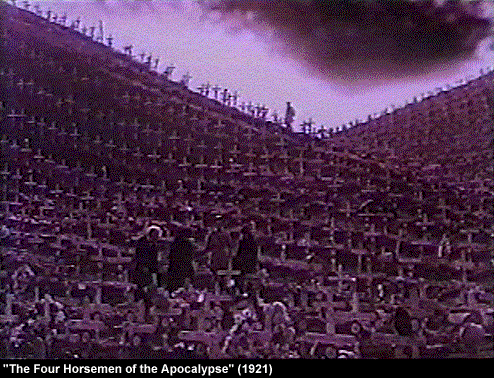

Though the performances make the film feel all the more believable and heartfelt, the film is still Rex Ingram and June Mathis’ all the way. Though the film may seem melodramatic to some – as was custom of the day – Ingram’s fantastic metaphoric use of imagery is startling. In particular, the scene involving the “man upstairs” discussing the Horsemen is a fine piece of filmmaking. Perfectly captures the tone of the beginning of war without ever showing scenes of war whatsoever. But Mathis’ writing, just as she did with the tonally different The Saphead a year before, is what gives the film its wonderful pacing and perfect development. You believe these characters to be real people, that their actions are justified, and that each consequence or reward is earned. It’s a beautiful and epic tale of love and hate, as well as the consequences of war (something All Quiet on the Western Front would make all the more real almost a decade later) that might have set a foundation for many epic tales to come, and showed that Griffith was not the only one who saw something in the idea of cinema’s power – the box office certainly being proof of that. Perhaps filmmakers of today who yearn to weave such intricate epic stories ought to learn a thing or two from the ones who started it all.


8.5/10


Thursday, September 1, 2016

The Three Musketeers – Why Swash-Buckling Is Hard to Love


Believe it or not, Fred Niblo’s 1921 action-adventure film The Three Musketeers is my first foray into the story of the swashbuckling heroes. Sword fights have never really been something that excite me (which is strange considering I love Star Wars and its essentially swords made out of light). It’s probably why films like Gladiator, Pirates of the Caribbean, Zorro and many others never really stuck with me that long. For me, the most exciting aspects about them are often the political back-dealings, but even then they get tiring as they often involve one evil character trying to gain all the power and one good character fighting to ensure justice is served. Perhaps Dumas’ classic tale is the original, but after watching so many of the same story, it certainly becomes a bore to me.

However, the infamous team of Niblo and Douglas Fairbanks (as the unofficial fourth musketeer, D’Artagnan) work wonders to bring the tale to the big screen. Though it’s not a film I would consider a favorite – again, these stories often don’t entertain me as they do others, which obviously ruins my Willing Suspension of Disbelief (a.k.a. I don’t get to have a good time) – it still managed to keep my attention for the majority of the film. The fight sequences are very much of its time, very little choreography, melodramatic death sequences, and worst of all minimal realism, but for being a fun, action-adventure film for its time, it does just fine within its tonal range.


Considering this is my first film for Fairbanks (shown below) as well, as all I’ve known about him is that he gave the go-ahead to let Buster Keaton star in his role for The Saphead (a role he originated in the play), and I suppose from that I can see how he could play a Keaton-like role on the big stage. However, as an actor – judging solely from this one film – it’s easy to see why he was well-liked and popular at the time (he has tons of charisma, he’s not terrible-looking, and he’s full of humor and heart), but not for one second did I buy him as D’Artagnan. I know, I know, it’s only my first incarnation of the tale and I never read the novel – perhaps he actually nailed him perfectly. But if that’s the case, it gives me very little reason to want to read the book because I felt like his take on the character was so over-the-top and campy that I never bought him to be “the one” who could bring down the Cardinal Richelieu’s premier sword-fighters. Again, breaking that Willing Suspension of Disbelief.


I suppose all of this sounds like I’m bashing the film, but really it’s not that bad. It’s very much of its time, and that’s an unfortunate criticism for many films I’ve reviewed from the 1920s so far, but I try to avoid that in my ratings and overall perception of films. For me – did it entertain or inform? Did it allow me to escape in this world? Was I engaged by the characters and the story? In the case of this film, I suppose these answers would be a yes, but a very slight yes. Niblo’s direction is entertaining, as is the story engaging, but it’s hard to immerse myself in a world when each of the elements aren’t coming together as cohesively as they should. Perhaps if Fairbanks were in a comedic version of the film, he’d be magnificent. Or if the rest of the actors, such as Nigel De Brulier (as Cardinal Richelieu), were in a serious film separate from Fairbanks’ goofy portrayal – perhaps then could the film find a solid, consistent tone.

For what it is, it’s a decent introduction to the popular tale of Alexandre Dumas and an entertaining enough way to pass the time. But perhaps the only reason the film still lives on today is because it’s an adaptation of a popular tale. Then again, I’ve yet to hear anyone say anything good about a Three Musketeers film thus far, so perhaps they just haven’t gotten it right yet. Maybe Fairbanks will impress me in a film that doesn’t benefit from a more serious tone.


6/10


Wednesday, August 31, 2016

The Affairs of Anatol – and Dissecting What It Means to Love


As Cecil B. DeMille was able to prove with his 1920 effort, Why Change Your Wife?, he knows and understands the struggles of marriage and the unfortunate temptations that might lead us astray. He also never forgets what led these individuals to marry one another in the first place, and I think that is what made his films so especially important at a time when divorce was seen as ungodly as murder. Perhaps it is this notion that made his films so popular in the day, yet exceedingly dated in modern times, but it’s this general understanding that still makes his films as emotionally palpable as they were back in the 1920s.

His 1921 endeavor, The Affairs of Anatol, attempts to cover the same matrimonial drama that made Why Change Your Wife so emotionally resonant, but the emotions just aren’t as strong here. On some level, the film captures the same sort of idea that men – such as myself – who strive to fix others are gullibly drawn down paths of temptation by “damaged” women who appear helpless. In that way, I can relate to Anatol in the sense that he tries desperately to put others’ needs before his own. In doing so, Anatol (played by Wallace Reid) ignores the needs of his wife (played by Gloria Swanson), and it begins to take a toll on his marriage as well as his life.


The synopses for the film all read the same, and they state that the film deals with literal affairs on Anatol’s behalf after his new marriage to his wife. Perhaps back in the 1920s, simply speaking with another woman could be considered an affair, but watching the film in today’s society it felt less like an affair and more like a friendship gone south.

That being said, DeMille’s voice still speaks to the power of marriage. The ending, though rushed in comparison to the rest of the film, gives the film the hope and satisfaction that many may find after a distressful time in a married couple’s life. Who knows if things will work out, but at least they can remember why they fell in love in the first place and I believe that’s still an important aspect into today’s marriages that is tragically missing. With divorce rates spiking at alarming rates, it feels as though a majority of marriages forget why they were ever together in the first place. Perhaps it’s for the best, but in my personal opinion, I feel like it’s often either a rushed and poor decision or neither parties are actually willing to work on their issues the way couples could back in the olden days. Not every day is rosy or sunny, but it doesn’t have to be either – that’s the beauty of love and it's easy to forget what that means.


In the case of this film, both parties involved in a case of jealousy or adultery could watch it and understand what each other is going through quite well – even nearly a full century later. That’s the timelessness of marriage, love, and all the problems that go along with it.

Despite of the breadth of the film’s narrative, however, the film does not feel as fully or emotionally engaging as DeMille’s previous Why Change Your Wife. I believe what made that film so superior was that we were able to see both sides of the husband and wife without feeling swayed in either direction – both sides were clear as day and both were just as understandable. With this film, you only truly see Anatol’s side of the situation with minor glimpses into his wife’s goings-on. You’re supposed to feel bad for this poor sucker simply because of his adoration of women and his desire to help them, but all along the wife simply plays along and stands by jealously. Perhaps that’s why the narrative feels less compelling and the protagonist feels like more of a nitwit compared to Meighan’s character in DeMille’s other film.


The saving graces, though, are the film’s performances which elevate the film back to a certain level of relatability. Each of the female supporting stars are effective both in understanding why Anatol feels the desire to keep them in his life and help them, but also why his wife, Vivian, might be equally reluctant. Bebe Daniels shines as one of the women, once again proving herself as she did in Why Change Your Wife – her sensuality is just as evident while maintaining the strong emotional core of her character. Gloria Swanson (pictured left) shines as well, in a glorified supporting turn as Vivian, but is not given nearly as much material to work with as in her previous effort which seriously effects the film and her performance. The true MVP for me was Wanda Hawley (pictured above with Reid) as the first girl Anatol strives to help. She perfectly encapsulates that dreamy, nostalgic, one-who-got-away girl Anatol and many of us have fallen for in high school, yet her dark side truly captures why she got away in the first place.

Despite the flaws in the narrative and the lack of true emotional resonance, mostly in part because of the lack of Vivian’s perspective, the film still strives to exemplify matrimony both in its purest and rawest forms – even for being a film for the past. An excellent cast is reason enough to check the film out, especially if one is a fan of Gloria Swanson or looking for some excellent female performances from the early generation of film. For those like Anatol, and myself, perhaps the film is also an important one in understanding and empathizing with the characters in the film, each of whom probably have played a large role in your life as well. For what it’s worth, though, DeMille may not have been an exceedingly great director with these two films, but he still showed a strong understanding of love in (what used to be) the modern world and a strong passion for sharing these stories for the world to relate.


7.5/10


Tuesday, August 30, 2016

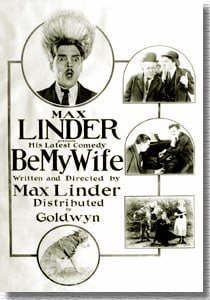
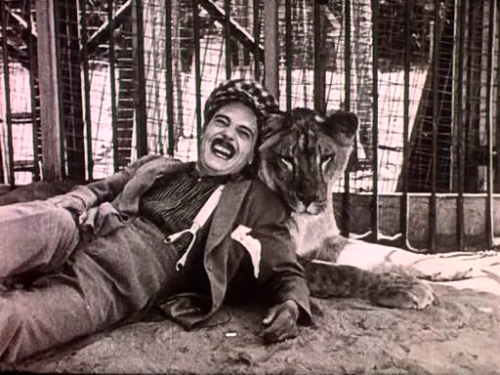
A Max Linder Double Feature: Seven Years Bad Luck & Be My Wife


As mentioned in my review for The Kid, while Charlie Chaplin may have been the premier slapstick comedy filmmaker of the 1920s, it was Germany’s Max Linder who truly fathered the art form. Though a lot of his work is now lost, as is unfortunately the case with many films of the decade, there still remain three prominent feature films intact – each released within a two-year span. These films are the incredibly influential and oft-hilarious Seven Years Bad Luck and the sweet and goofy Be My Wife.


Before the Marx brothers would eventually borrow the mirror gag, Linder did it first with Seven Years Bad Luck. As with both of 1921 features, he played a dumbed-down and exaggerated version of himself that would serve as inspiration for Charlie Chaplin and especially Buster Keaton. With his signature pencil-thin moustache, his silly top hat and cane, and a general dumbfounded and down-on-his-luck attitude, Linder brought slapstick to life by crafting such ridiculous (and worst-case) scenarios for his protagonist and then allow him to struggle his way back to a happy ending. In the case of Seven Years Bad Luck, the story follows Linder who wakes after a heavy night of drinking (something many can still relate to today!) as he accidentally breaks a mirror before his eventual marriage to Betty (played wonderfully by Alta Allen) and begins to sense that bad luck is headed his way, potentially dooming his marriage. Chaos ensues, as it often does in slapstick, and Linder masterfully weaves his way through each scenario with both physical finesse and charisma that must have certainly been an inspiration for many aspiring slapstick filmmakers of the day (maybe even now).

The film is not as sweet or heartfelt as the likes of Chaplin nor is it as visually stunning or provocative the way Buster Keaton’s films often are, but it still offers plenty of laughs and the infamous mirror gag (which you can find on YouTube) is some of the best stuff I’ve seen in a slapstick comedy to this day. However, after the first fifteen minutes go by, there is not much of a plot as the film simply moves from gag to gag. What would have worked better as a short film simply drags out the story until it’s over – which could potentially be why Linder never found success with his three features. For what it is, though – and if you’re a fan of slapstick – the film is still quite funny and offers a shred of genius that you could see why he was so inspirational to other artists of the time.


Be My Wife, his second 1921 feature, does not have the same spark of creative hilarity that Seven Years Bad Luck (save a pretty hilarious scarecrow scene), but it does attempt to tap into the heart and relatability of his characters. It could just be me, as has been the case since I would watch Tom and Jerry as a kid, I always hated watching protagonists get treated or accused unfairly even if just played for laughs. I always found myself rooting for Tom to beat that little brat Jerry, but it never happened and it made my heart hurt watching that show as a little kid. The same goes for a lot of slapstick comedy where I find the humor funny, but it irritates me to no end seeing a good character be accused of something he didn’t do. Sure, in the end, everyone gets their just desserts and the protagonist gets the girl, yah-dah yah-dah yah-dah… But when the entirety of the film is about a character being unfairly accused, it makes it difficult to watch. It’s a personal thing, I’m aware, but it’s a big reason why I found the humor less funny this time around and the film itself less pleasant. For what it is, though, it still has a lot of heart and shows a softer side to Linder – even if the ending feels super rushed.

All in all, though he was successful for a brief period in the 1910s, the 1920s brought him little in the way of success. His victorious reigns were then handed to the likes of Chaplin, Keaton, and Lloyd who would all find greater success in Hollywood borrowing inspiration from his films and better utilizing the framework he set.

As with an unfortunate number of great comedians in the world, his life was marred by anxiety, depression, and ultimately tragedy. In 1925, four years after these two films were released, he and his wife were found dead of an apparent murder-suicide at a hotel in Paris. Though it’s difficult to imagine the same man who made such lively films full of hilarity and love could ever end his life in such a way, at least his work will live on and (just as he most likely would have wanted) will be remembered through his art instead. So for what it’s worth, I’m thankful for Max Linder. Even though these two films were not as great as other slapstick I’ve seen, they were still a delight and his influence on many others in the art form is admirable. As Linder stated after the premiere of his final film, “I don’t feel funny anymore;” if it’s any consolation, I think the world and many other artists may disagree.

For both films: 7/10


Wednesday, August 24, 2016

The Kid : The Tramp's Sweet Feature Debut


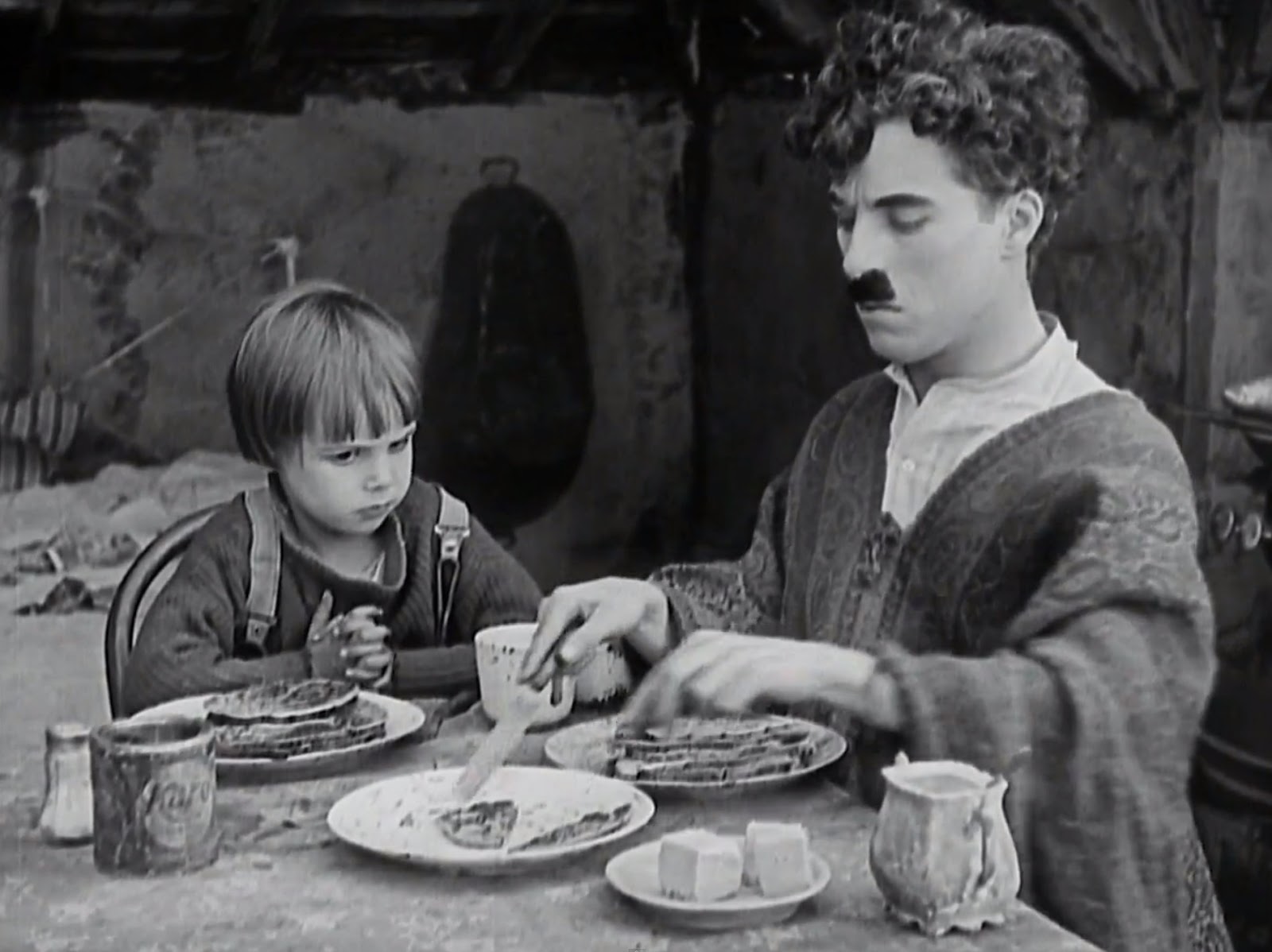
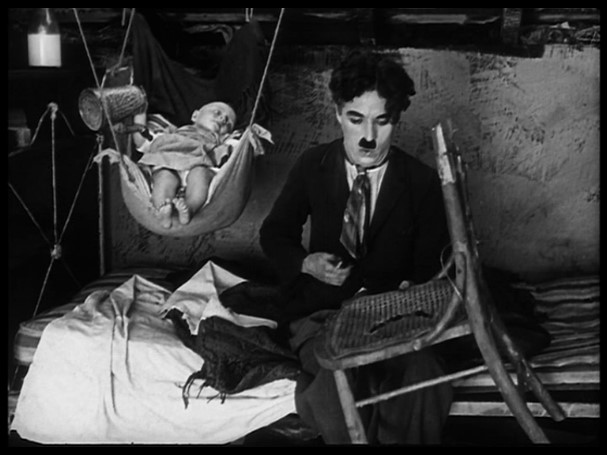
Despite Max Linder (whose films will be reviewed shortly) being the true father of the slapstick silent comedy, Charlie Chaplin is the one to truly take advantage of all of its incredible possibilities on the big screen. He may not have had, at least in his 1921 feature film debut The Kid, the most elaborate gags, but he almost certainly had a gigantic heart that made his films incredibly charming, lovable, and most of all relatable. Using his ever-popular Tramp character that he had developed over the past decade through a variety of short films, Charlie Chaplin decides to take his goofball character with a heart of gold to the big screen. While it may be a small story – a man finds an infant on the street and decides to care for it – the emotions are played up in a big way and the comedy is pure slapstick gold.

Having heard many, many, many things about Chaplin’s films for many years and having never gotten around to them, it was nice to finally make my way into his filmography with such a pleasant start. However, it’s difficult to shake the feeling that the film almost certainly would’ve worked better as a short film. Okay, I get it; a fifty-minute film is already pretty much a short film – especially by today’s standards (where anything under 60 is pretty much declared a short film). That being said, I feel like the first two-thirds of the film are full of wonderful little cutesy moments that draw you in, but the last third (after such a beautifully moving climax involving a rooftop chase scene and what has to be Chaplin at his emotional best) merely lingers until a predictable resolution.

It’s probably unfair to criticize such an early film for predictability, as predictability is something mostly a by-product of living in the 21st century after millions of films have rehashed the same stories for audiences for many decades. Certainly, that’s not what I dislike about the film – which isn’t much I dislike by the way, I still quite love the film – but it’s how it plays out. After such an engaging climax, there’s a lengthy dream sequence that – while funny and light-hearted – does not do much to serve the actual story and feels completely out of place. Once that ends, the film pretty much ends without any heartfelt emotional resolution. It just kind of ends.

At the same time, though, one has to remember this was early cinema and Chaplin’s film was pretty much a breakthrough in terms of blending slapstick comedy and drama together. Perhaps he was still working out the kinks of crafting a feature film and while its last third has flaws, it’s still quite moving and funny – something almost entirely unheard of back in the early 1920s and before (as far as feature films were concerned).


Chaplin perfectly communicates this incredibly heavy and melodramatic story with a fitting light-hearted touch. The two complement each other so well that it’s no wonder the film was such a large hit with audiences back in 1921 (being the second highest grossing film of the year and with a budget less than half of the typical money-makers of the decade). Chaplin, in complete creative control of the product (director, writer, actor, and even composer), uses each of these aspects to deliver on the promise of its opening title card: ”A picture with a smile—and perhaps, a tear.”

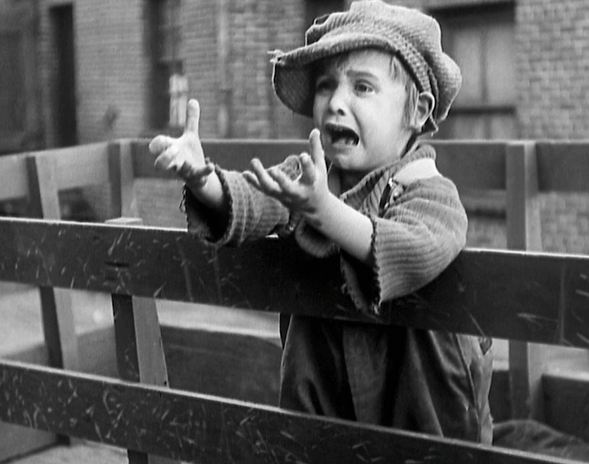
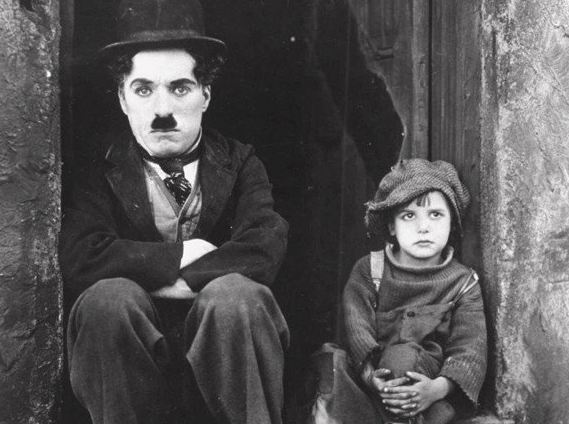
Of course, it’s not just Chaplin alone that makes this film work. In what has to be one of the superior child performances, Jackie Coogan does outstanding work as the titular kid. He’s equal parts cute, affecting, and well-coordinated on par with Chaplin’s Tramp. Both he and Chaplin have incredible chemistry that you believe the credibility of their five-year relationship and it only makes the poignant scenes more effective. Edna Purviance also works wonders here as the “woman,” who had given the kid up but soon became a renowned celebrity and charity giver.

While there are undoubtedly many other Chaplin films to explore, this is certainly a film that shows a lot of potential for Chaplin both as a filmmaker, actor, and composer. His biggest strong suit is obviously his care for his audiences, how he wants to offer a story that both makes them smile and cry in equal doses, but he doesn’t play them for fools. He lets plenty of the action in his films speak louder than words, using very minimal dialogue in his films, and the stories hold quite a bit of weight to them. If Keaton was the thrills, then Chaplin was certainly the heart and this film has no shortage of that here.


8/10


Monday, August 22, 2016

The Cabinet of Dr. Caligari and What Lurks Within


I will start this review by saying that this review contains spoilers. I realize it’s almost a century-old film, but as I had just seen it for the first time, there are obviously those who will be seeing it for the first time, too and saying “well, it’s been around forever!” is no excuse to spoil the fun for anyone. Anyway, that being said…

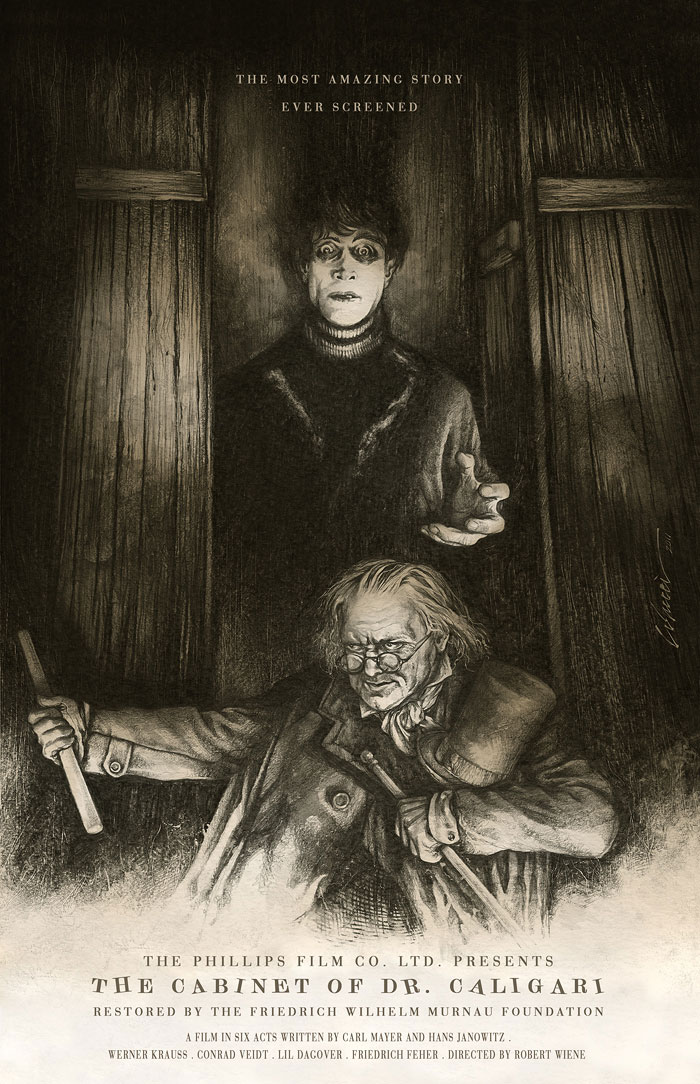
Robert Wiene’s 1920 hit film The Cabinet of Dr. Caligari is not only a film that must have been ripe inspiration for Tim Burton in terms of its design, but is also a fantastic exploration into the mind of mental illness. As many films have tried since, this must have been one shocking film of its time by offering the audience an unreliable protagonist that forces the viewer to think much more deeply about the conflict in the film – as well as the conflict outside their front door. The film follows a man named Francis as he tells the story of the mysterious Dr. Caligari and the sleepwalker living in his cabinet.

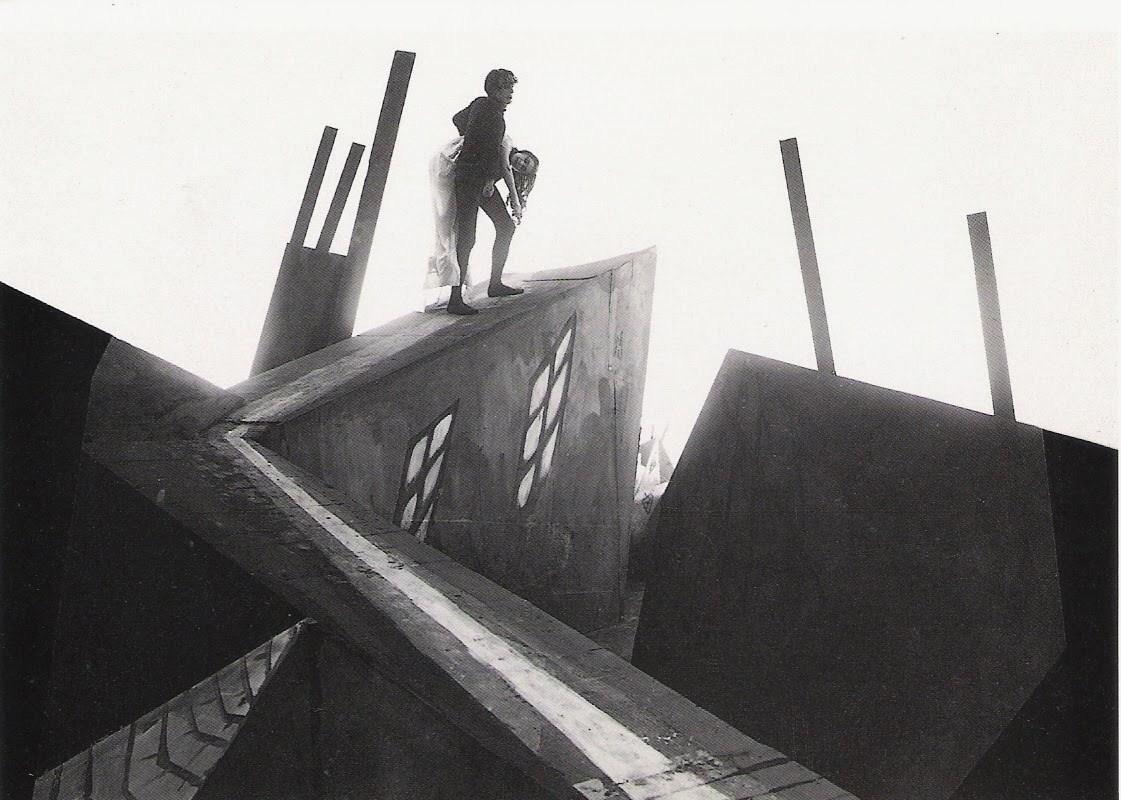
Seeing as this was my first foray into the world of German Expressionist filmmaking, I was not expecting such elaborate set designs and gothic style make-up or costuming that would make any Hot Topic regular feel at home.


However, long before the idea of Gothicism became a sweeping teenage trend, the use of intricate, topsy-turvy sets serve to show the world as seen through the eyes of someone with mental illness with ingenious creativity. While the story is perhaps a bit too poorly paced for my liking, this expressionist art on display in this film certainly proves itself to be about the most creative use of imagery since George Méliés’ A Trip to the Moon eighteen years prior.

Putting aside my unabashed love for the design of the film, there are still quite a few flaws for me in terms of the story itself. Despite it only being a little over an hour long, its pacing is all over the place. Perhaps this was the intention of the filmmaker, but for me it felt too much like a rollercoaster. At first the film moves too abruptly to setting up location and characters, then slows down for a large chunk of the film where it hardly explores the wonderful avenues it sets itself up for in terms of conflict or mystery, before it finally reaches its conclusion before any mystery is developed. As a film that is about attempting to uncover who is murdering the townsfolk, it offers very little time in the whole detecting department, and almost right away answers the questions the viewer has.


But if the ending is any indication, maybe there is more here than meets the eye. I’ve read many others discuss the film as almost an early indication of what was to come during the time of World War II many years later. For instance, Dr. Caligari represents the possessive and brainwashing attributes of the German government and Cesare, his somnambulist science experiment, represents the mindless killing machines of Adolf Hitler’s Nazi regime. We always wonder, ”how did a man convince an entire nation that one race was superior to all others and then force them to murder millions for no reason whatsoever?” Perhaps that’s the same question we ask in Dr. Caligari, albeit to a much smaller level. Is it the fascist ideal that’s mentally ill or are we, as bystanders, the ones locked in the madhouse? Maybe it’s reading too much into a film when it was long before Nazism was even a thought in the world, but it’s still a very intriguing thought.

Judging the film solely based on what it must have meant back in 1920, it’s a fine piece of creepy entertainment. A bit lacking in the mystery department, and could’ve easily explored so many avenues that seemed infinitely exciting and would’ve made for a much more worthwhile film for me, but for what it is, it’s certainly one of the best of 1920s so far. In particular, the artistry present in the technical aspects is especially admirable and really draws you in as a viewer into this fantastical world that has served as an inspiration for many filmmakers since.


8/10


Friday, August 19, 2016

The Penalty : An Unusual Revenge Tale with Legs to Stand On


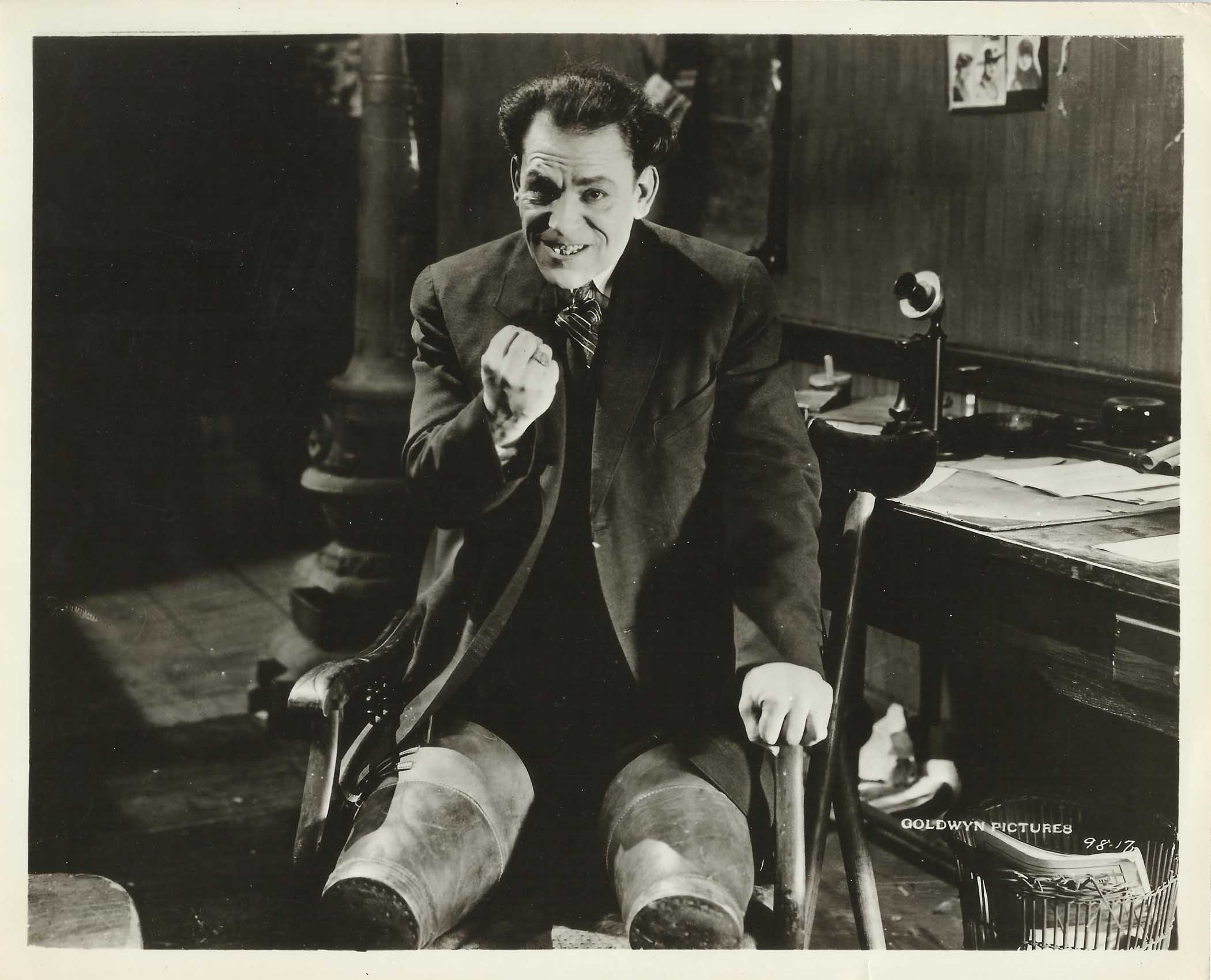
Nearly scraping the bottom of the barrel for 1920, I uncovered a Lon Chaney film that is rarely – if ever – discussed. And it should be because it harbors one of Chaney’s finest performances without any need for extensive (possibly racist) makeup or one-note characters. In Wallace Worsley’s The Penalty, Chaney stars as a man who – at a young age – had his legs wrongfully amputated by an amateur doctor and has lived his whole life with a Napoleonic rage, thriving in the seedy underbelly of San Francisco, while hoping to exact revenge on the doctor – who has now become a widely renowned surgeon – some twenty odd years later.

I can say with certainty that this film must have been one hell of a sales pitch back in the early 1920s:
”So there’s this guy, he has his legs cut off as a kid, but it was a mistake because the doctor can’t read charts, and so this kid grows up and he’s pissed, but he’s also a kingpin of the San Francisco crime syndicate. Oh, also he houses women like sweatshop workers, but we’ll get to that later. Anyway, so he wants revenge on this doctor, but he’s famous now, and his daughter’s a sculptor and she wants to draw Satan, and to drive home the point that he is an evil man, he decides to be her muse for this sculpture. Oh, but he’s only doing it as a ruse to get to her father. Oh, and the cops are onto him with some covert mission. Because he’s evil and stuff. But who could play a guy who looks like Satan and is either has no legs or is willing to tie his legs to his ass to give off the effect that he has no legs? He’s gotta look like Satan though.”
“Well, Lon Chaney’s pretty ugly. And available!”
“Perfect!”


It’s certainly a weird and twisted idea for 1920 – probably not so much nowadays as convoluted plots about troubled weirdos as psychotic masterminds is kind of a niche category all of its own these days. But for 1920, this film was probably ahead of its time. Not in terms of style or technique or even acting, but due to its content. However, that doesn’t mean it’s a weak film because it’s not right for its time, in fact it only makes the film stronger that it can stand apart from the rest of its era so well. My one problem is that the film offers an ending that seems to come completely out of nowhere, almost as if a studio had dipped their grimy fingers into the cesspool of script fuck-uppery and drizzled it over the last ten-fifteen pages of the script. That’s probably a bit harsh, and the ending really isn’t bad as much as it could potentially be divisive, but it still doesn’t feel like it was the way the director or writer really wanted it to go. Maybe you – whoever reads these – can be the judge of that, but for now, it was a big factor in the drastic change in personal feeling I had toward this film.


That being said, the one aspect that was relentlessly commendable, even throughout the wishy-washy ending, is Lon Chaney’s commanding performance. Never mind the fact that the man literally bound his legs at the knees as tightly as he could to give off the effect that he had no legs (ahh, the days of no computer-generated imagery… You can hear Lt. Dan laughing from here), he still managed to offer an incredibly nuanced performance of a troubled, yet misunderstood individual even through the bouts of pain. From what I’ve seen of Chaney so far, he’s been a very over-the-top and generally typecast actor. Either he’s playing a makeup-heavy freak in a horror picture, or a cunning and vile thug/ evil-doer, and while he plays both the freak and evil-doer here, he hardly plays them to the same effect he has in other films. Here, the film rests solely on his shoulders and he can both frighten and cause you to empathize with in the same scene, perfectly capturing the psyche of this eccentric madman without overplaying him to a level of ridiculous he’s often known to do.

Thankfully, director Wallace Worsley helps to capture the persona of the character as well by lingering on scenes and building up tension in scenes just long enough to let the emotions play out naturally. There aren’t any loud, melodramatic scenes that aren’t thrown in just because it’s the 1920s; they’re given credibility and are respectfully tied into the characters’ personalities. The script, for about three-quarters of the film, offers a unique and fully-developed perspective on these types of characters as well – something that films of today could learn a lesson or two from. Even despite how it ends, it’s still a film well worth checking out – if, at the very least, because of Lon Chaney. I doubt there are many performances of his better than this, and it’s certainly the best male performance I’ve seen from the decade (but I also haven’t seen many yet). Sometimes you just have to look in the hidden areas to find small gems like this. I know that I wouldn’t have even thought twice about watching this film if it hadn’t been for my favorite film of the year, Monastery of Sendomir, changing my opinion about how even the small films of nearly a century ago can still hold weight with the big dogs of its time and even today. Hopefully Chaney’s performance does the same.


7.5/10