Thursday, August 4, 2016

Fantastical Monsters Alive in Prague: Paul Wegener’s The Golem


I suppose if you only ever dedicate yourself to one role or film for the rest of your career, then make it the best you possibly can. This thought process must have been what director and star Paul Wegener had in mind when he directed his third adaptation of The Golem. After both directing and starring in a 1915 and 1917 version of essentially the same story (or at least involving the same character), Wegener reprises the role once more and sits behind the director chair to bring a Frankenstein-esque story to the big screen a third time.

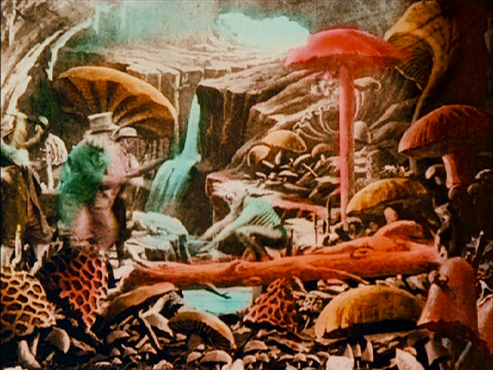
The first thing I noticed about the film was its incredible use of saturation to color the film strips to bring a lot of vibrancy to the picture. From the film’s opening images, the prophesizing Rabbi Low (played by Albert Steinrück) looks to the stars atop of his humble church and smells a catastrophic disaster fated for his beloved Jewish community. From the bluish tint to the film that gave the “night” feel to the film (in the bottom-left corner of the picture to the left) as well as the sickly green glow of his lair (top-right in the picture), I was instantly drawn into the atmosphere of the film.


In order to battle the impending doom, Rabbi Low builds a creature – The Golem – with the help of dark spiritual forces to protect his people. What happens next is essentially the same story as Dr. Frankenstein and his famous monster.

Though the story is a slightly generic version of Frankenstein, and with much more political allegory and religious sentiment to boot, Wegener still tells the story in an exciting way. Wegener himself (pictured below, who looks a lot like Guardians of the Galaxy’s Dave Bautista) also plays the titular Golem and with more dedication than many of the other performers in the same film.

Despite having no dialogue whatsoever, he acts expertly through his facial expressions and mannerisms – either played to frightening or humorous effects. Outside of him, it was nice to see Ernst Deutsch of The Third Man fame at a very young age as the cowardly Rabbi protégé.

Though the ending carries a few anti-Semitic vibes with it and goes to some really strangely dark places, the film still serves as a film full of wonder and excitement that must have been a thrill to see in the early 1920’s. I can say so far that the European directors of the time certainly showed much more dedication to their craft than the American/ Hollywood directors offering simple, crowd-pleasing stories. While the film itself was not exactly perfect, it was still a great fantasy/ adventure film (some call it one of the early “horror” films as well, but I rarely got those vibes). The visuals gave the film the proper flare to draw the viewer into its atmosphere and the costumes/ production aspects were all put together proficiently to feel as if you were alive in the sixteenth century watching this story unfold. While Wegener never made anything quite as successful as his Golem films, especially this version, it certainly helped usher in (along with Robert Wiene’s The Cabinet of Dr. Caligari) a long tradition of successful horror/ fantasy films from European directors. For that alone, it’s worth checking out.

7.5/10

Wednesday, August 3, 2016

Why Change Your Wife : A Dated, but Brilliant Commentary on Marriage

Long before Gloria Swanson gave the world one of the most iconic performances in all of cinema in Billy Wilder’s (very meta) Sunset Boulevard, she was a thriving silent film star often under Cecil B. DeMille’s masterful eye. As both of their careers were rising at the dawn of the new decade, this film certainly helped to solidify each as some of the best in the business. Why Change Your Wife follows Swanson as the titular wife who is constantly berating and badgering her husband, Robert (played by Thomas Meighan), until he bumps into a model named Sally at a lingerie store while shopping for his wife – hoping a gift might make her happy. Eventually, Robert attempts to fight the “matrimonial resignation to fate” that the opening title cards declare most men are instinctively born with, but not everything goes the way he had hoped – and Gloria Swanson’s Mrs. Gordon sure isn’t giving up on herself either.

It’s a sweet little film made all the better with some solid performances from the main trio – Meighan, Swanson, and Bebe Daniels (who plays Sally). In particular, Gloria Swanson’s transformation from the irksome wife into the one-who-got-away ideal woman of Mr. Gordon’s dream (those eyes...) is a delightful turn and the best female performance I’ve seen so far in the 1920s.

It’s not difficult to see why Swanson was declared one of the pivotal stars of the 1920s and an influence on many actresses over the next century. But that’s not to shortchange Meighan or Daniels who give affective performances that are only one step behind Swanson’s glorious turn. Meighan spends most of the film sighing with defeat or looking worried, but it works to lend the film some comic relief and as a man in a long-term relationship, I can definitely say a lot of his behaviors are not that far off from that of a committed man. Daniels also excels in the first half of the film in a performance that is equally intoxicating as well as sensitive, but the second half of the film changes her character a bit too much that she loses her edge (more the fault of the writer than anything on her part).

The one problem the film is plagued with, however, is that it is a film very much meant for its time. From the misogynist title cards or dialogue that too often discuss the importance of beauty or accessories to define a woman to the many Bechdel tests the film fails many times over, the film would be met with much controversy had it been released today. While I am very much an advocator of equality among all genders, races, lifestyles, etc., I am not going to judge a film poorly based on the standards of its time. Art is only a reflection of the times, and while times have changed, the films stay the same and I will judge them solely off their quality as cinematic works. That being said, the work is still very dated both in its dialogue and in its scenarios.


While all of this may be true, the film still offers a very honest and brilliant commentary on marriage and fated souls that was certainly ahead of its time in that regard (weird; a film both dated and ahead of its time?!). As one title card in the film states: “Matrimony, like a dip in the sea, first stimulates, then chills. But once out of the water the call of the ocean lures the bather to another plunge.” This brilliant line alone is what the film is essentially about. Whether that plunge be with another man or woman, or back into a marriage that has not yet found its ending, it’s always that intimacy which we lost souls search. As someone who has been in many long-term relationships, as well as currently in one, it’s easy to lose the gratitude and fire that once ignited a relationship because we have sat in the water too long. But once out of the water, you’re shaking cold and wishing you could go right back in. The film, while still showing the difficulties of marriage and monogamy, still ends on a note of hopefulness that might open the eyes of some married or committed individuals who may have taken for granted the one thing they should hold most dear. For the commentary alone, however dated it may be, I enjoyed the film and hope to see more of the glorious Gloria down the road as well.


7.5/10


Tuesday, August 2, 2016

The Monastery of Sendomir : Suspense with Simplicity

A year before his most acclaimed and highly influential film, The Phantom Carriage, and long before he played the lead protagonist in Ingmar Bergman’s Wild Strawberries (uniting professor with protégé), Swedish director Victor Sjöström crafted this brilliant silent feature from 1920, The Monastery of Sendomir (sometimes titled Secret of the Monastery). The premise of the film is an incredibly simple one and almost plays out like an old fable or urban legend throughout its brief running time of 54 minutes: a cantankerous monk offers refuge to a group of weary travelers within his monastery and shares a story of the monastery’s owner and his wife. What begins as, what appears to be at least, a horror film about spirits or haunted castles turns into something far more terrifying – involving the morality of humans.

Though the story is brief and told almost like an extensive anecdote or campfire tale, Sjöström manages to capture a variety of emotions within a short period of time. His film bears a heavy burden of intensity that looms over each frame like a dark cloud, which perhaps could explain why the film feels so much like a horror film of its time. The wonderful lighting and photography of Henrik Jaenzon certainly aids in crafting an eerie and troubling atmosphere, at times (at least for a modern viewer) reminding me of Frankenstein or Dracula of years later.

Even without any music to accompany the film (unfortunately, at least with the video I saw on YouTube), Sjöström still manages to create a truly compelling picture thanks to his genuine care for his remarkably engaging characters as well as his careful dedication to tell the story in the exact amount of time it requires. There is little time wasted on unnecessary subplots or attempting to maneuver back and forth between past and present as the monk tells his tale; instead Sjöström allows the film to breathe naturally as the intensity builds to an exceptionally thrilling climax.

On top of the wonderful atmospherics of Sjostrom’s profound eye, the cast actually lends a hand to create incredibly full-bodied characters. Though I have never seen or heard of any of the actors involved (I happen to be severely uneducated in too many foreign films, hence my odyssey through film), they all happen to provide excellent performances all around and fill me with excitement about seeing any future work from them. In particular, the lead protagonist of the Count played by Tore Svennberg is a fully lived-in performance that I have yet to see such dedication to during this decade (from a dramatic standpoint anyhow). As the intensity of the film builds and builds, he only becomes more inhabited within the character’s fear, anger, and anguish.

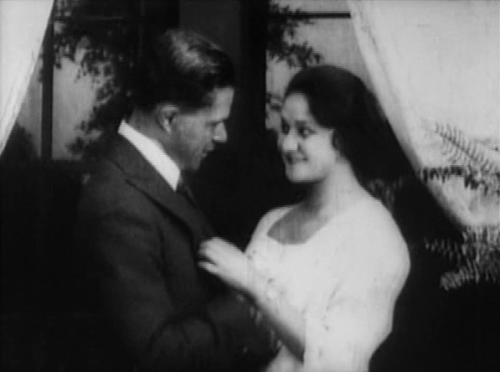
The stand-out, however, has to be Tora Teje (pictured left) as his wife, Elga. Though she appears to be the simple, naïve trophy of a rich Count, there is actually something more devious to her than we see, and she provides so many layers to a performance that never required many at all. In doing so, it only makes the character and the story feel more realistic for a time so long ago.

All I can say is that if Victor Sjöström could manage that much suspense and emotion with such little time and no music, I cannot wait to see what wonders await with his popular Phantom Carriage. Yes, yes, I know; I haven’t seen it yet. And crazy considering so many directors – particularly Ingmar Bergman and Stanley Kubrick – have been influenced by the film and his work, but maybe that’s the reason going back to your roots is so helpful sometimes. If we are influenced by the greats, then who were they influenced by? Of course, if Victor Sjöström’s Monastery of Sendomir is any example of his influential power, then it would certainly make a whole hell of a lot of sense.


9.5/10

Sunday, July 31, 2016

The Saphead : A Hearty Introduction to Buster Keaton


Long before Buster Keaton became a household name during the 1920’s, Douglas Fairbanks recommended Keaton to play the leading role in this film, which Fairbanks had played on the stage previously (where it was originally titled The Lamb). The idea of movie stars was just coming into fruition throughout the past five years as cinema made its stride, and Fairbanks was certainly one of those stars. Thanks to Fairbanks’ suggestion, Buster Keaton became one of those stars as well.

Herbert Blaché’s The Saphead follows Keaton as Bertie, the titular “saphead” – purely innocent and oblivious – as he strives to marry a long-time family acquaintance, Agnes, while trying to impress his powerful financier father who believes he should make something of himself out in the world. Like any good Keaton film (even though this was not directed by Keaton himself), things do not go his way outright. On the side, there is Mark Turner, his brother-in-law, who is trying to keep secret the details of his affair with a woman named Henrietta from Bertie’s sister, Rose (Mark’s wife). If it doesn’t sound messy just yet, don’t worry, it will. Meanwhile, Bertie’s father is currently living well-off thanks to his new investment with the Henrietta mine – literally striking gold. All of these details converge at a climax equal parts hilarious, thrilling, and touching.

Long before Billy Wilder ever put that bittersweet touch on his films that made them so memorable, relatable, and classics in every sense of the word, The Saphead sure serves as an inspiration to that type of cleverly written, gently handled film that Wilder was known to do so well. At the heart of it all is Keaton’s adorable portrayal of a gullible, but kindly pure man who only lives as a “free spirit” with the best of intentions – to win the heart of his one true love, Agnes. In the hands of a lesser actor, the absent-minded character of Bertie might have been handled a little too inanely and made his character simply seem stupid rather than likable. But the power of Keaton is he always had a way to make his character likable, the same way Chaplin managed for many years as his famous “Tramp” character, even without using clever words or suave faces. Though he was not a household name at the point of this film, and his signature stunt work in silent films was yet to be renown to the world, his slapstick humor and creative stunt work during the climax at the Stock Exchange was certainly enough evidence of what was to come.

However, the film does not solely work due to Keaton’s delightful performance – as well as the decent performances of his supporting cast – but the writing is what puts it above the other films of the year or decade. Adapted from a play, it certainly has all the aspects of a good play with clever, whimsical dialogue which dashes off the tongue to make for many humorous moments as well as setting up many elements that would come together for an explosive climax. Thanks to director Herbert Blaché’s wonderfully light touch, it actually manages to work outside of the stage as it almost feels ripe for a film straight out of the 1950’s during Wilder’s reign where clever dialogue reigned supreme.

All in all, the film has several elements going for it and very few going against it, which makes it an instant crowd-pleaser for me. The one element that sets it apart, however, is Buster Keaton which was in a league only occupied by him and Chaplin for the next decade which made audiences hearts soar with delight, but feel with the utmost sincerity. For this, it easily pushes itself above many other films of the decade, and only excites me more to watch many more films from his repertoire and for the hopes that I can manage to find many other small gems such as this throughout the next few years. Hopefully quite a few more audiences will do the same regarding this film, as it would have been well worth the 27 cents to see it in theaters during 1920 (many times over, might I add), but now we even get to watch it for free on YouTube. Should count ourselves lucky.

9/10

Saturday, July 30, 2016

What the World Needs Now: Fighting Prejudice Through Art

I want to say that watching Oscar Micheaux’s film, Within Our Gates (1920), after suffering through D.W. Griffith’s racist masterwork, The Birth of a Nation (1915), helps to subside my anger for the treatment of African-Americans during the early 1900s, but really this film only builds upon it – albeit for an entirely different reason. Within Our Gates earns a spot in the cinematic hall of fame for being the oldest living print of an American film written and directed by an African-American – the legendary Oscar Micheaux. The film depicts the troubling life of Sylvia Landry (played with great innocence by Evelyn Preer) as she attempts to rebuild a Southern school following her fiancé’s abandonment. Though the times have long changed from the late 1800’s when men, women, and children were forced into labor, she and many other African-Americans still face unfair and unwarranted prejudice from those who claim them to be “inferior” beings (ugh, just typing that boils my blood…). Despite these prejudices, Sylvia remains true to her cause to garner enough money to save a school in the South for uneducated children who want to better themselves and contribute to society.

Though she faces many obstacles along the way, this is not a film about tragedy or the evil of white people. In fact, despite its disturbingly honest portrayal of the treatment of African-Americans over the years (even having the guts to show lynching and attempted rape), Micheaux never ignorantly accuses white people of being evil or impure – simply the ones whose evil is necessary for the story. And he certainly never painted certain races certain colors or outright discriminatorily slammed another race like a certain director whose film I’ve reviewed…
Instead, Micheaux paints a picture of a woman brought up through tragedy and still wanting to bring some good to the world. She wants to help children in need, she loves fully and purely and does not give in to every romantic whim that comes her way, and she even steps in front of a moving vehicle to save a small, white child. Without even trying, Micheaux creates a character we are born to care for as long as we are not ignorant enough to step in her shoes.

Aside from the social and racial implications the film offers, the film still serves as an enthralling drama about Sylvia’s struggle to both find money to build the school as well as love. Micheaux has an eye for creating rich characters and wants his audiences to really invest time in each and every one. Even though it’s a simple story, the film allows the audience to think deeply about the issues at hand for not only the characters, but all African-Americans post-Civil War era. Sylvia is just one simple woman in a world filled with many tragic stories just like hers, but Michaeux demonstrates the heartbreaking plight of many through the witnessing of her one story. Yes, sometimes film is meant to entertain, but I believe the real purpose of film is to force an audience to think about their own lives as well as the lives of others. In this case, I would say Michaeux crafted a landmark of black cinema that perfectly captures this idea clearly, especially at a time in which the world – just as it was back in 1920 – really needs to see all sides to the story of every person’s life.
7.5/10

Thursday, July 28, 2016

Ignorance and the Re-Birth of the Klan: D.W. Griffith’s “Masterpiece”

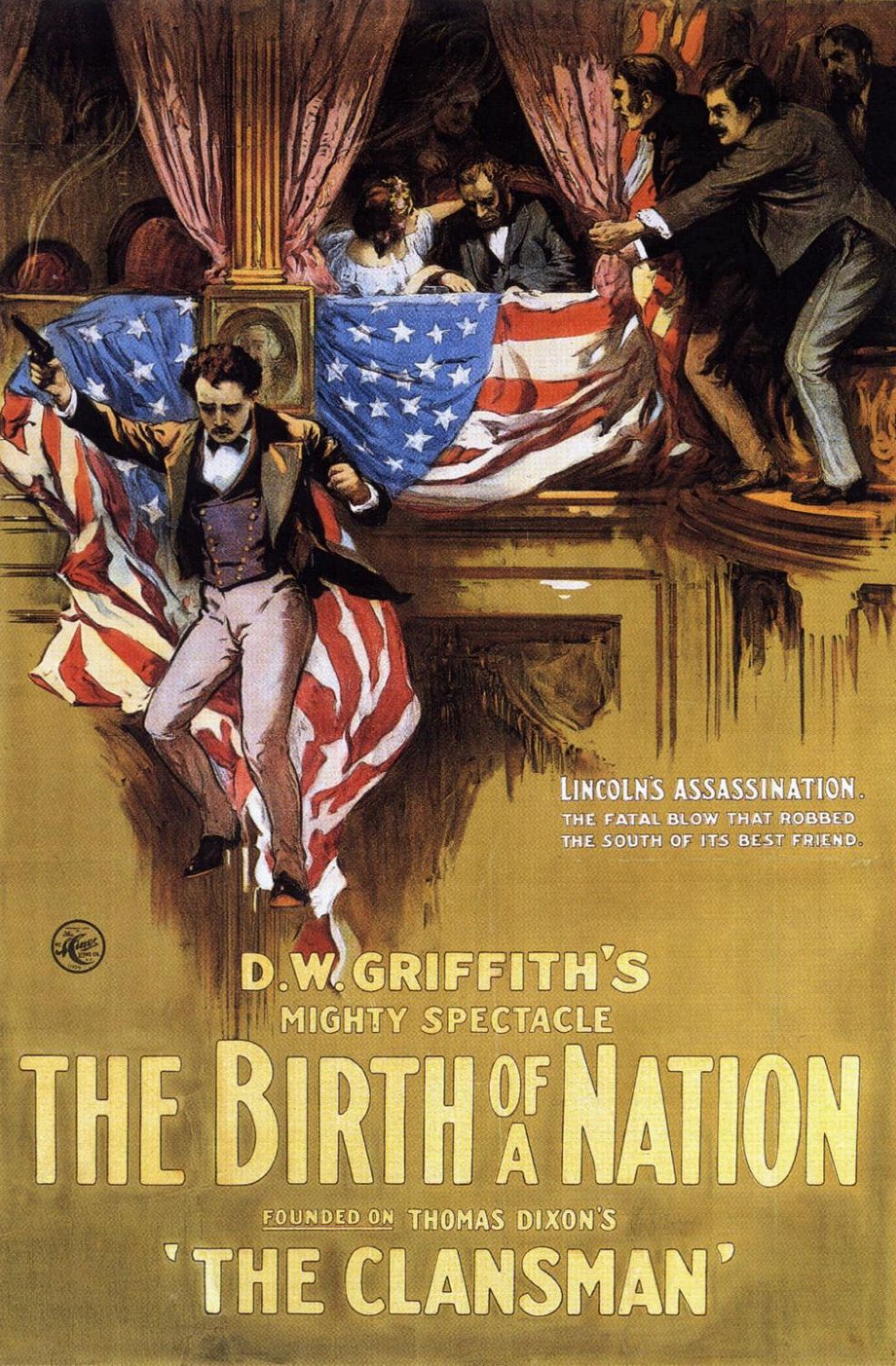
It is really, really difficult to not hate D.W. Griffith’s The Birth of a Nation. A film made by a man so ignorant and blatantly racist that it took me about nine different attempts of pausing and taking a break from the film to finally finish it over the course of two days. I’m sure the controversy this film stirred has been talked to death among countless reviews, essays, and more, but it’s simply too difficult to ignore the fact: this film is as unflinchingly bigoted and racist as it gets. Yet, simultaneously, it’s difficult to ignore just what this film did to the art of cinema – and that’s what I’ll do my very best to focus on in this review.

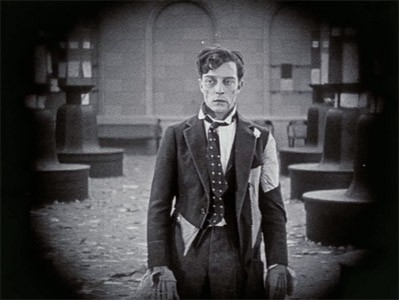
The film follows two families on opposing sides of the American lines during the 1860’s when America was on the verge of a national war and racism was alive and well. Comprised of two parts (one focusing on the calm before the Civil War storm and its extensive battle, and the second focusing on the subsequent Reconstruction Era), the film was the longest and most extensive American audiences had witnessed before. In fact, the film was the highest grossing for many years following its release and spawned sequels (that’s right, sequels! So, if you didn’t get enough racism the first time, come on down and get you some more!). However, the reason this film was such a massive hit was not due to its content (despite popular belief, not everyone was on the same wave-length as Griffith in 1915; in fact, it stirred up quite a controversy and he had to make Intolerance as a result of the backlash due to his own intolerance); rather, the film was a hit due to its never-before-seen use of camera movement, close-ups (particularly with the "iris effect" shown below), its own original music score (though borrowing from the classics as well), parallel editing techniques, wide-ranging narrative scope, and many other story-telling devices that are now used as common practice in many of today’s films.

Attempting to ignore the blatant discriminatory attitudes the film portrays, it’s easy to see why this film is still held in such high regard. In fact, if it weren’t for Griffith’s intolerant behavior, historians, critics, and film fans alike would celebrate this film for giving birth to the art of cinema. Unfortunately, not only did it inspire countless filmmakers and artists alike, but it also rejuvenated the spirit of the notorious Ku Klux Klan – hence why they still remain to this day.

But isn’t that the power of film? Trying to put aside my personal feelings about the situation, the influence this one film had on so many others – the effects of which we still feel now and forever – only further demonstrates the incredible power of cinema and why it remains such a celebrated art form to this day. Imagine the year is 1915 and you walk into the theater to see this film and you are simply blown away by the technical achievement at hand. It’s almost like a night out at the opera, but instead the actors are simply pasted onto hundreds of photographs rolling by at light-speed. And there’s a story that spans years with countless characters to become attached to and empathize with (depending on which side you’re on). And the battle sequences almost feel like you’re right there on the field. And the camera gallops along with the horses, and the camera closes in on the actors’ faces and it feels so intimate and real. What a wondrous treat the cinema must have been on that opening night!

Sadly, the film’s regrettably positive representation of such a racist culture nearly makes any admiration for the technical achievement feel like an afterthought. Aside from each of these technical accomplishments, the only positive remark I can make about the film is that it spawned countless others to command the screen just as D.W. Griffith did even better – and far less narrow-minded. For that, I am grateful as I’m not sure where I would be today without my love of film and I couldn’t imagine a world without its existence, and I am equally grateful to live in a world that no longer allows films like The Birth of a Nation to get made… unless it’s title is borrowed by a non-white with a proper focus on the trials and tribulations of his culture.


6.5/10 -- Rating based off the film's quality; with personal feelings, an easy 1/10.

The Roots of Passion: A Film Odyssey Begins


Due to my lack of passion and drive for film the past two years, I have decided to set a goal of watching at least five films from each year beginning with 1920 and working my way down to 2016 (or 2017, depending on when I complete my journey). In doing so, I hope to not only learn and appreciate the art of film over its formidable years as well as introduce myself to some of the many celebrated filmmakers I’ve yet to embrace thus far (i.e. Ingmar Bergman, Luis Bunuel, etc.), but also to reignite that love for film I’ve so dearly missed the past couple years of my life.

Before I begin that trip into the heart of cinema, though, I wanted to start back where it all began. At a time when film was only seen behind curtains at carnivals where the idea of moving images was boxed into the same category as magic tricks and circus clowns, some dared to dream about what wondrous things could be made from these images. Two filmmakers in particular, from the very early 1900’s, introduced the world to the idea of visual narrative story-telling: George Méliès with A Trip to the Moon and Edwin S. Porter with The Great Train Robbery. These films would eventually catapult cinema as an art form to be reckoned with throughout the next century and still a major economic, social, and creative force to this day.

Beginning with the later film, Edwin Porter’s The Great Train Robbery (1903) would seem to the casual moviegoer of today as the most basic of plot lines. The short 12-minute film (the longest of its time) follows a group of bandits as they rob a train and subsequently flee from the law (or a version of it anyway…). The film is widely considered a milestone for the film industry because it was essentially one of the first to introduce the capability of film as a tool for telling stories, but also the first “action” or “Western” film of its kind.
The film was so influential, in fact, that Martin Scorsese borrowed its closing shot of a man shooting a pistol at the camera, toward the audience, in his 1990 film Goodfellas (which you can see to the right). Not to mention, it’s even been borrowed for the opening titles of every James Bond film as well. However, while the modern movie lover, such as myself, can find little merit as filmic entertainment compared to those who perfected the craft of the Western genre years later, such as Sergio Leone, it’s difficult to deny its influence on the audiences and – more importantly – the artists of the day. Feeling thrilled by the action on the screen and wanting to ignite the same reaction in others by pursuing the endless possibilities film had to offer, The Great Train Robbery inspired many future filmmakers to entertain audiences for many years to come.

However, the film that truly captured my attention and even personally inspired me was George Méliès’ A Trip to the Moon (1902). Once again, another film that inspired many future filmmakers (most prominently Jonathan Dayton & Valerie Faris, who paid homage to the film for their Smashing Pumpkins music video, “Tonight, Tonight”) and illustrated the possibilities of cinema and how it could transport audiences to whole new worlds, quite literally even. In fact, Scorsese (again) was so inspired by Méliès that he dedicated an entire film to his life’s work (as well as a salute to the great pioneers of cinema). The film’s basic premise is this: a group of wizards decide to create a rocket ship (remember, this was long before anyone ever traveled into space), fly to the moon, and beat up aliens. I’m pretty sure if Méliès had pitched that idea to me back in 1902, I would have called him crazy and say it was impossible to do. Of course, back then there were no studios breathing down anyone’s necks and nearly all filmmakers worked purely out of passion for the art. Méliès and this film deserve careful consideration though because of the visual mastery that went into it (not just in the sets, costumes, and props themselves,
but in the idea of hand-drawing his film reels to bring to life vibrant, luscious moving images for audiences to revel in). For this, I give Méliès my full respect as a film lover and an aspiring filmmaker because to stand in the face of insurmountable odds and having very little idea of how the public could potentially respond to a film about wizards in space is brave and admirable if anything else. But it worked and many filmmakers tried for many years to replicate its genius and innovative eye. Even though very few ever came close, the film itself still managed to inspire both artists and audiences alike to believe in the power film could have both on the heart and the mind.

To me, being able to take some words on a page and a few moving frames and create an experience that resonates, inspires, and captivates audiences is what film is all about to me. Being able to start my journey with these two films has both opened up my eyes to the trials and tribulations of early filmmakers, but also sparked a bit more passion in my heart for the art of cinema once more. Though Porter and Méliès are not filmmakers who got the opportunity to excel during the prime years of cinema’s inception, they are most certainly to be commended for spawning the art form and demonstrating to the world its endless potential. In particular, the artistry on display in A Trip to the Moon is still astounding to this day and only inspires me to offer as much dedication to the craft as he did. Hopefully throughout my own journey through over a century of film, I’ll find even more inspiration and knowledge to aid me in my own efforts that I can pass on to many others like me who dare to dream of traveling to other worlds (literal or otherwise).